
Food truck or trailer? Match the unit to your menu, your capacity, your locations, and your real budget before you sign anything.
Choosing between a food truck or trailer is one of the most expensive decisions you will make as a new vendor. Too many people make it for the wrong reason. They pick the unit that looks good in photos, or the one a seller calls a great deal. Six months later, they find out it can’t hold their menu, can’t reach their best locations, or can’t keep up with a lunch rush.
A trailer usually gives you more kitchen space for the money, but it needs a tow vehicle and more setup time at every stop. A truck costs more up front and carries engine maintenance. In exchange, it moves faster, parks easier in cities, and handles daily location changes better. The right choice is the one that fits your menu, your capacity needs, your locations, and your local health and fire rules. Price alone should never make the call.
I’ve watched owners buy the wrong unit and spend years fighting it. Others picked the right one and build real businesses on it. The difference almost always comes down to the homework they did before they wrote the check. Let’s do that homework.
Key Takeaways
- A trailer usually offers more kitchen space per dollar, but it requires a tow vehicle, a capable driver, and more setup time at each location.
- A truck moves and parks more easily, especially in cities, but adds engine and drivetrain maintenance to your costs.
- Your menu and capacity needs should decide the size and layout of the unit, not the other way around.
- Health, fire, and vending rules can differ for trucks and trailers, so check them in every jurisdiction before you buy.
- Inspect any unit before you pay, and get your financing numbers on paper first.
Food Truck or Trailer: What’s the Real Difference?
The truck-versus-trailer decision shapes everything that follows. It affects where you can vend, how fast you can serve, how many people you need on the crew, and what it costs to keep the unit on the road. Whatever you choose should line up with your business model, your budget, and your local regulations.
Food Trucks: Styles and Configurations
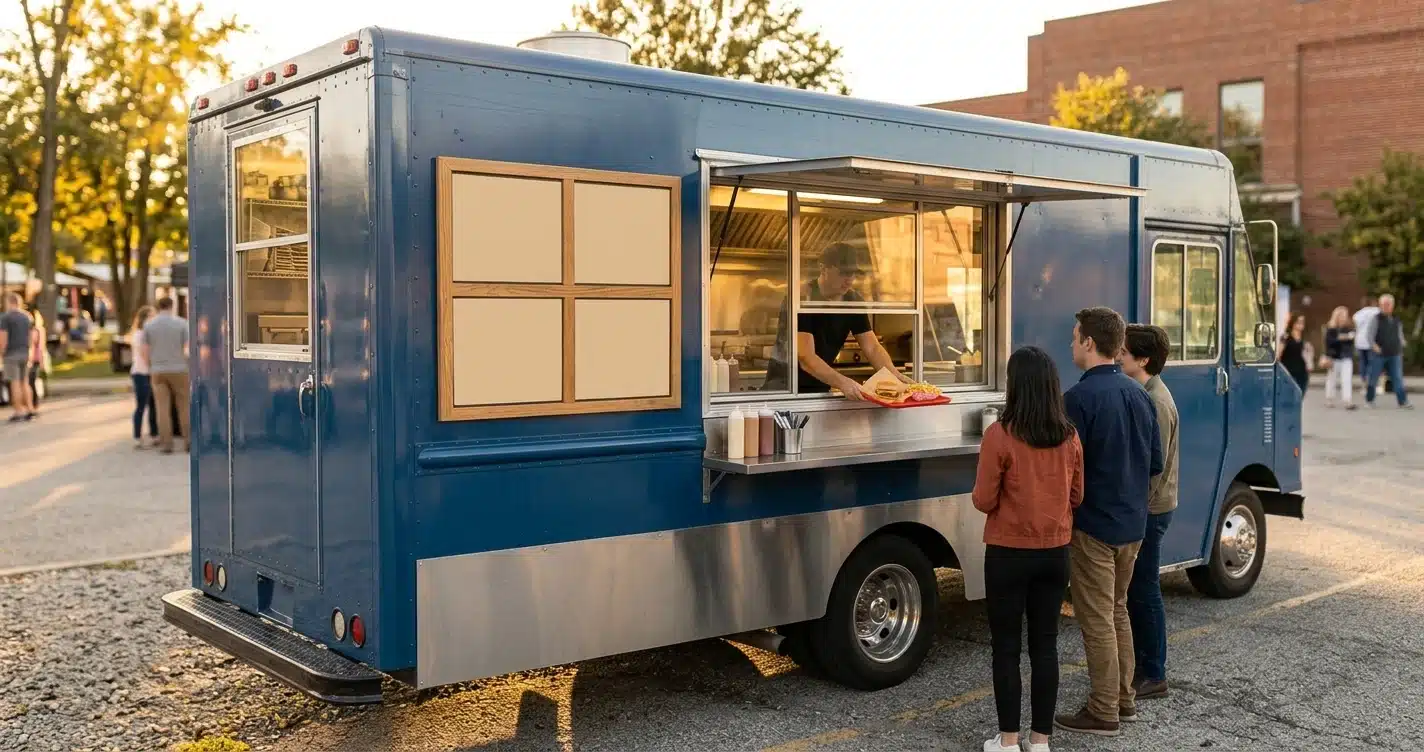
Food trucks range from converted step vans to custom builds on a new chassis. Each style changes your kitchen layout, where the service window sits, and how much equipment you can fit. The engine and the kitchen travel together, and that’s the big advantage. It’s also the big risk. When the engine goes down, the kitchen goes down with it.
Food Trailers: Sizes and Designs
Food trailers come in many sizes, from compact 8-foot units to 32-foot models built for high-volume events. A trailer often gives you more storage and work space for the money. That’s why trailers are popular on festival circuits and at semi-permanent spots. The tradeoff is real, though. You need a tow vehicle rated for the loaded weight, a driver who can back into a tight event space, and extra time to set up and break down.
Why Do So Many Owners Choose the Wrong Unit?
Here’s the mistake I see over and over. A new owner finds a unit at a price they can afford, buys it, and then tries to squeeze the menu inside it. That’s backwards.
Your menu determines your equipment. Your equipment determines your space and power needs. Space, crew, and speed of service then set your capacity, meaning how many customers you can actually serve in an hour. When the unit is too small, underpowered, or laid out wrong, capacity drops. Lines walk away, and sales fall short of what the event could have produced.
The second mistake is shopping on sticker price alone. A cheap unit that needs rewiring, a new hood system, or a bigger generator in the first year isn’t cheap. Neither is a new build that shows up with problems the builder should have caught. Whether you buy a food truck or trailer, skipping the homework means paying for it twice.
What Should You Budget for a Food Truck or Trailer?
Purchase prices vary widely by size, condition, builder, and region. DoorDash’s merchant guide to food truck costs cites commonly quoted ranges of roughly $30,000 to $100,000 for a used food truck and $75,000 to $200,000 for a new one. Trailers generally start lower than trucks with comparable kitchen space. A fully equipped trailer plus a capable tow vehicle can close much of that gap, though.
Treat any published range as a starting point, not a budget. Your real number comes from written quotes for the exact unit and equipment list you need. Then add what the sticker price leaves out: installation, generator, propane system, fire suppression, wrap, insurance, commissary, and working cash for the first slow months.
Permits belong on that list too. Mobile vending permits are a normal operating cost in many parts of the country, not a surprise somebody sprang on you. Know what they cost in every jurisdiction you plan to work, and price your events to cover them. Get insurance quotes before you buy as well. Coverage needs differ for the vehicle, the kitchen equipment, and liability, as I explain in What Food Truck Insurance Coverage Do You Actually Need?
How Much Space Does Your Menu Really Need?
Start with the space your menu and service style actually require. Workable layouts run from about 100 square feet for a tight, simple concept up to 250 square feet or more for a bigger operation. Equipment size, storage, crew size, window placement, and prep area all drive that number.
This is where menu discipline pays off. A focused menu of 2 to 4 core items needs less equipment, less storage, and fewer people. It also moves faster through the window. Every item you add costs you space and capacity. Lay out the kitchen so food moves in one direction, from cold storage to prep to cooking to the window, without people crossing paths.
Which Local Regulations Affect a Truck Versus a Trailer?
Before you commit to a unit, call the health department, fire marshal, and licensing office for every place you plan to vend. Rules differ by city, county, and state. Some areas limit unit size, where you can park, or what equipment you can run.
Fire codes deserve special attention. The National Fire Protection Association publishes food truck safety guidance built on NFPA 1, NFPA 58 for propane, and NFPA 96 for cooking ventilation. Many local fire officials enforce those standards. Expect questions about hood suppression if you cook with grease-producing equipment, and about how your propane system was installed. Health codes typically cover water systems, food storage, handwashing, and waste disposal.
What Equipment and Utilities Does a Mobile Kitchen Need?
Your unit needs health code-compliant kitchen facilities, adequate storage, and reliable utilities. Choose features that match your menu and service style, not a builder’s standard package.
Kitchen Components and Layout
Even in a compact space, you need clear zones for prep, cooking, and service. Plan for prep tables, cooking stations, a handwashing sink, and whatever warewashing sinks your health department requires. Keep the layout safe for a crew working shoulder to shoulder during a rush.
Pay attention to how your cooking equipment is fueled. Electric equipment recovers heat slowly. As volume rises, each batch takes longer to come back to temperature, and service gets progressively slower. That’s a capacity problem, and your customers will feel it at the window.
Storage and Refrigeration
If your menu needs dry and cold storage, plan room for both. The FDA Food Code requires cold-held TCS foods to stay at 41°F (5°C) or below. Your refrigeration has to hold that temperature with doors opening all through a rush. Size storage for a full day’s usage plus backup supplies. Reach-in and under-counter units help you use every inch.
Power, Propane, and Water
Lay out your utilities so you can reach every fill point, valve, and panel for maintenance and refilling. For power, don’t guess from a sales brochure. Add up your running watts, add the single largest startup surge, then add 20 to 30 percent headroom. I walk through that math in How Many Watts Does a Food Truck Generator Actually Need?
Water tank size depends on your local health code and your menu. Confirm the required fresh and wastewater capacity with your health department before the build. Changing tanks later costs real money.
Why Should Capacity Make the Decision for You?
Most buying guides frame this as food truck versus food trailer. I frame it as capacity. How many customers can this unit serve in an hour, with your menu, your crew, and your equipment, at the locations you’ll actually work?
Run that number for both options. A trailer with a bigger kitchen may serve more people per hour at a festival. A truck may win on weekday lunch stops, because you can open fifteen minutes after you park. Speed matters, but accuracy and friendliness count too, as I cover in How Important Is Food Truck Speed of Service? Pick the unit that gives you the most capacity where your sales really come from.
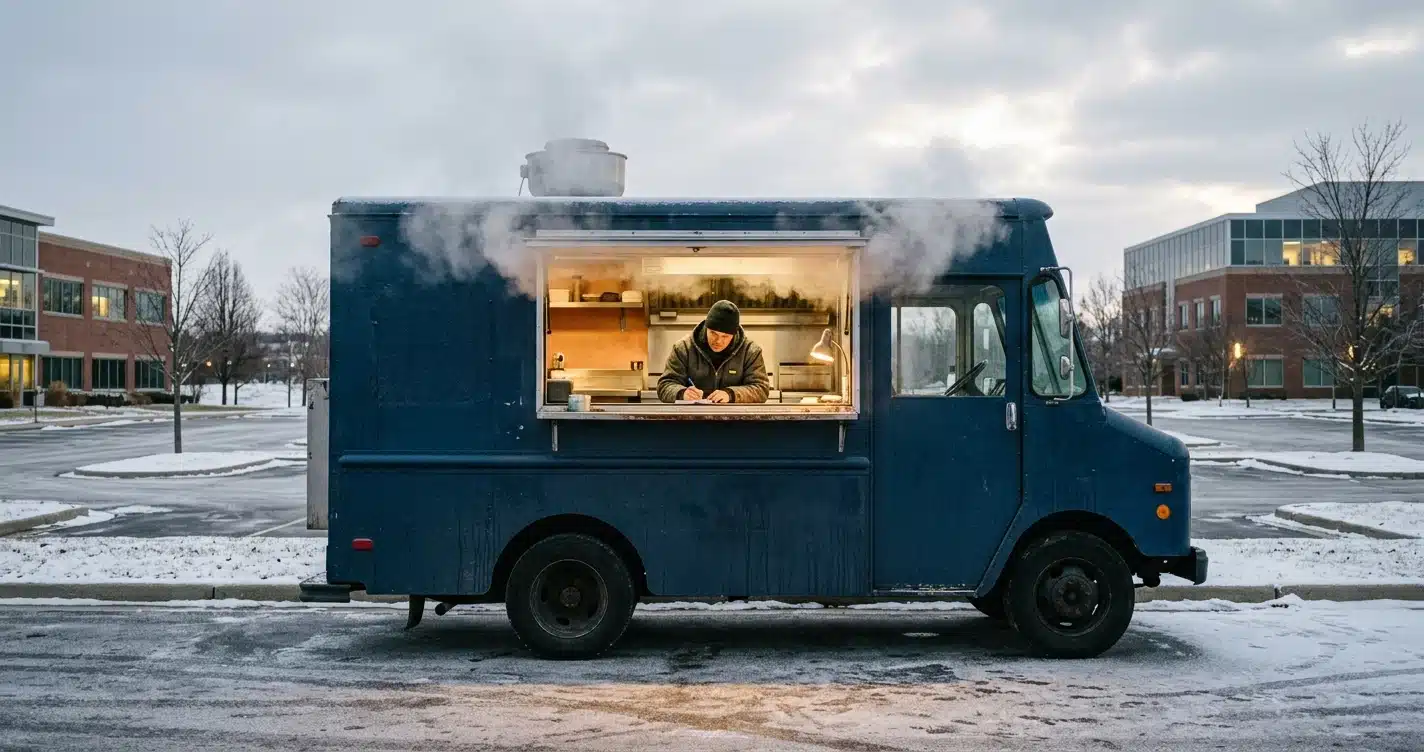
Then ask one more question. What happens to my sales when this unit breaks down? A truck with a dead engine takes your kitchen off the road. A trailer with a dead tow vehicle does the same, unless you have a backup way to pull it. Plan for both.
Food Truck vs. Food Trailer: Pros and Cons
Food Truck Advantages and Disadvantages
Where a truck wins:
- Self-contained, so you can park, set up, and open fast.
- Easier to move through city streets and fit into tight curbside spots.
- Better suited to daily moves between several stops.
Where a truck costs you:
- Higher purchase price for comparable kitchen space.
- Engine and drivetrain maintenance on top of kitchen upkeep.
- When the vehicle breaks down, the whole business stops.
Food Trailer Benefits and Limitations
Where a trailer wins:
- More kitchen and storage space for the money in most cases.
- Flexible layouts and room to add equipment later.
- Unhitch at the site and use the tow vehicle for supply runs.
Where a trailer costs you:
- Requires a tow vehicle rated for the loaded trailer weight.
- Harder to maneuver and park in tight urban spaces.
- Longer setup and breakdown at every location.
How Do You Choose the Right Unit? 7 Steps
- Define your business model. Write down your menu, expected daily customer count, and service style. A simple coffee service can work in a compact truck, while full meal production may need a larger trailer.
- List every piece of equipment. Record the nameplate power, fuel type, and dimensions for each item. Confirm the layout meets your local health code before anyone starts building.
- Map your locations. List where you’ll actually vend and how often you’ll move. Trucks handle daily moves and city streets better, while trailers fit semi-permanent spots and scheduled event circuits.
- Call the regulators first. Contact the health department, fire marshal, and licensing office in each jurisdiction. Ask what they require for your unit type before you sign a build contract.
- Inspect before you pay. Whether it’s a food truck or trailer, check the mechanical condition, electrical system, propane system, plumbing, and structure. Request maintenance records and hire a professional inspector, because that fee is small compared to the repairs it can uncover. If problems surface after delivery, read How to Handle Structural Equipment Failures in a New Food Truck.
- Get your financing numbers on paper. Compare bank loans, SBA loans, equipment financing, and lease-to-own offers using real quotes. Read every term, including the down payment, the rate, and the total cost over the life of the deal.
- Plan for growth and maintenance. Ask whether the unit can handle menu changes, more volume, larger events, or a second service window. Then build a food truck maintenance schedule before your first day of service.
Frequently Asked Questions
Is a food truck or trailer cheaper to start with?
A trailer usually costs less than a truck with comparable kitchen space. That gap shrinks once you add a tow vehicle rated for the loaded weight. Compare the full package: unit, tow vehicle, equipment, insurance, and maintenance. Get written quotes for both before deciding, because published price ranges are only a starting point.
Do food trucks and trailers need different permits?
Often, yes. Many jurisdictions treat trucks and trailers differently for vehicle registration, parking, and inspections. Fire requirements also depend on the cooking equipment inside. Call the health department, fire marshal, and licensing office in every area you plan to vend before you buy, because rules change from one city to the next.
What size generator does a food truck or trailer need?
Add up the running watts for all your equipment, add the single largest startup surge, then add 20 to 30 percent headroom. Many standard units land between 6,000 and 12,000 watts, while small coffee or snack setups can run lower. Use your own equipment nameplates, not a brochure estimate.
Should a first-time owner start with a trailer?
Not automatically. A trailer can lower the entry cost and give you more space, which helps many new owners. If your plan depends on daily moves, downtown curbside stops, or fast setup, a truck may serve you better. Let your menu, your locations, and your capacity needs make the call.
What should I inspect before buying a used food truck or trailer?
Inspect the frame, axles, tires, brakes, electrical system, propane lines and fittings, plumbing, water heater, refrigeration, and hood suppression service tags. On a truck, add a full mechanical inspection of the engine and drivetrain. Ask for maintenance records, and pay a qualified inspector before you hand over any money.
The Bottom Line
The choice between a food truck and a food trailer will shape your business for years. Weigh your budget, your menu, your target locations, and your local regulations. Do that honestly, and you’ll pick a unit that fits your goals instead of one you have to work around.
If you’re new to mobile food service and your locations allow it, a trailer can be a smart way in. It usually costs less to start and avoids the engine maintenance that comes with a truck. Whatever you choose, make sure it has room for your equipment and crew, meets health and fire standards, and delivers the capacity your best locations demand. A unit that looks great but can’t keep up at the window is an expensive decoration.
So don’t buy the unit you can afford today. Buy the unit that can earn the money you need tomorrow.
Keep Learning
From the NSFVA Blog
- When Cheap Food Trailers Become Expensive Mistakes: why a low sticker price can turn into the costliest decision in your startup.
- Lease, Buy, or Loan? Food Truck Equipment Financing Guide: the math to run before you sign any financing offer for your unit or equipment.
From the NSFVA Library
- How To Buy a Food Truck (Electrical, Build, and More!) Checklist: NSFVA members can download this checklist to review electrical needs, tow vehicles, and build quality before buying.
- How to Start a Food Truck (Don’t Get Ripped Off) Checklist: members can use it to spot the common traps that cost new owners money before opening day.
Not a member yet? Both checklists live in the NSFVA library, and full library access is reserved for members. Vendor Membership includes live mentorship calls, the full Learning Center with videos, workbooks, and templates, access to industry experts, and exclusive vendor discounts. If you’re about to spend serious money on a truck or trailer, get the tools before you sign. See what Vendor Membership includes.
About the Author
Bill Moore is the Founder and Executive Director of the National Street Food Vendors Association (NSFVA), a trade association dedicated to advocacy, education, and unifying street food vendors nationwide. He has worked in food service since 1977, and his first street food vending was in 1981. Bill hosts the “10-Minute Food Truck Training” podcast, leads NSFVA’s weekly Mini Class and group coaching sessions, and is the author of Food Truck 101: Beginner to Winner and, with Melisa Moore, Food Truck 201: Get Off the Truck!