Snacking is one of the fastest-growing eating occasions in food service, but on a truck, every new item has to earn its place in your capacity.
Snacking Is Growing. Does It Belong on Your Truck?
Somewhere this week, a food truck owner is going to read that snacking is the next big growth opportunity. By Friday, they will have added loaded fry flights, churro bites, a dip trio, and two new specialty drinks. By Saturday night, their ticket times will be pushing 15 minutes and the rest of the line will be walking away.
The idea was not wrong. The execution ignored capacity.
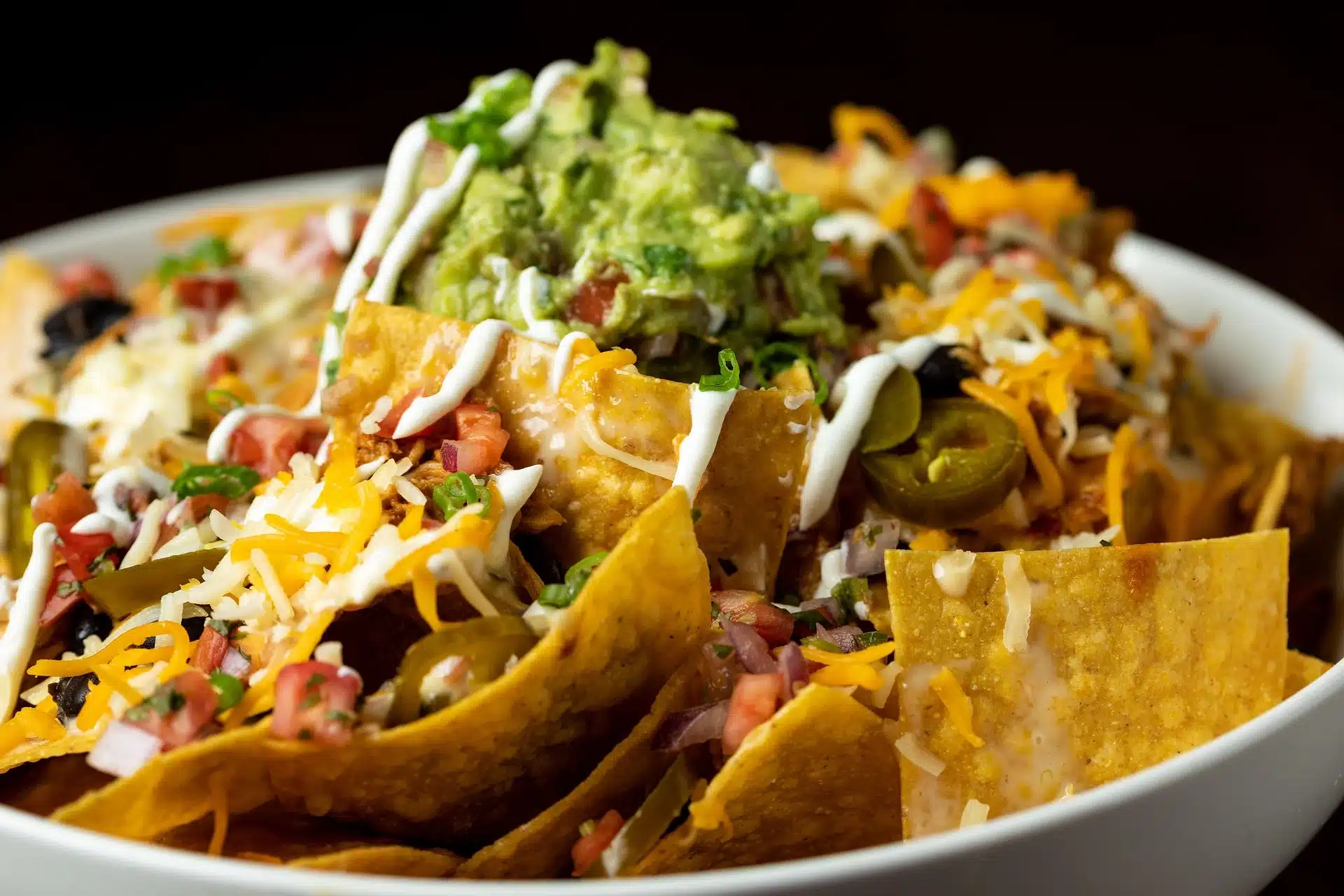
So, are food truck snacks worth adding to your menu? For many trucks, yes. The right snack can raise your average ticket and put money in the register during hours when your window sits dead. But a snack only works on a truck when it uses the stock you already carry and the stations you already run. It also has to add almost no time to the order. Fail any one of those tests and it will cost you more than it makes.
That is the whole lesson. The rest of this article shows you how to run the numbers and pick the right snack, not the trendy one.
Key Takeaways
- Snacking is a real, growing eating occasion, and most snackers are not buying those snacks from food trucks yet.
- On a food truck, a snack is a capacity decision first and a menu decision second.
- The best food truck snacks ride on ingredients, equipment, and steps you already use for your core menu.
- During a rush, a snack-only order can cost you money by taking a slot a full meal could have filled.
- Test one snack for 30 days and track how many tickets include it before you add another.
Why Do So Many Food Truck Menu Additions Backfire?
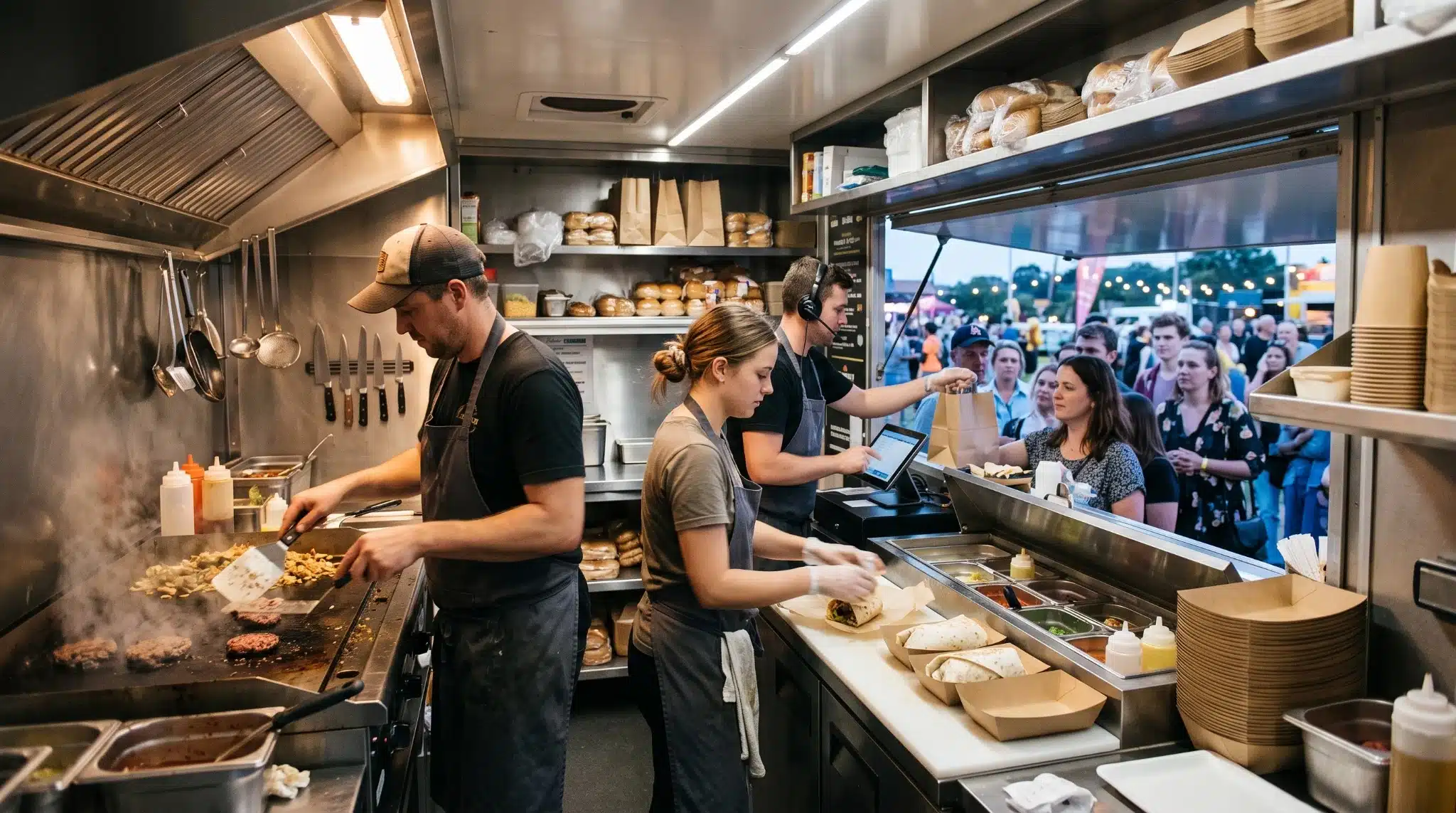
Here is the trap. A restaurant with a walk-in cooler, a full line, and a crew of eight can add a snack section and absorb it. You cannot. Your truck has a fixed amount of cold storage and a fixed number of fryer baskets. It has a fixed amount of flat-top space, and usually two or three people working inside a box that gets hotter every hour.
Every item you add competes for those same limits. That is why I talk about capacity instead of efficiency. Efficiency makes owners think they can just work faster or add more people. Capacity reminds you that the truck has physical hard limits.
Most of the struggling owners do not have a sales problem first. They have a menu problem. They carry too many items, too many ingredients, and too many one-off steps. Waste pushes their real food cost above what their recipes say, and every order turns into a special project that slows the line. I teach a core menu of two to four items for exactly this reason. It keeps prep tight, waste low, and the window moving. You cannot be all things to all people.
So when an industry article says food truck snacks are the next big thing, my first reaction is not excitement. It is a question: what is this going to do to my line on a Saturday night?
One more thing is worth knowing. A marketing manager at Rich Products, a company that sells snack and dessert ingredients to restaurants, wrote the QSR Magazine piece that started this conversation. That does not make the advice wrong. Much of it is solid. It just means you read it the way you read any supplier pitch: know who is selling, then check the idea against your own numbers.
Now let’s look at what the research actually says, because there is real opportunity here.
What Does the Research Say About Snacking and Food Service?
The consumer shift is real, and it is big.
According to Mintel data cited in QSR Magazine’s article on snacking as a growth opportunity, 80 percent of consumers snack more than once a week. Only 36 percent buy snacks from food service more than once a week. That gap is the opportunity. People are snacking. Most of them just are not buying those snacks from a food truck.
The shift is even sharper with younger customers. Datassential found that more than 40 percent of Gen Z consumers say they snack more than they did a year ago. Its research on what it calls “little treat culture” found that 77 percent of Gen Z treat themselves to a small indulgence at least once a week. For consumers overall, that number is 66 percent. That is the guest who walks up to a truck at 3 p.m. for something sweet and a cold drink.
The Mintel 2026 US Snacking in Foodservice report found that 93 percent of consumers say it is important that a food service snack be quickly available. Read that again. Nearly everyone buying a snack expects it fast. A snack that takes six minutes is not a snack. It is a speed of service problem.
The same Mintel report found a pricing tension worth your attention. About 62 percent of consumers see food service snacks as too expensive, yet nearly as many say they will pay more for a high-quality snack. Translation: guests will judge a mediocre $7 snack hard. A great one at the same price will sell.
Beverages belong in this conversation too. Rich’s consumer research, cited in the same QSR article, found that more than half of consumers sometimes replace a snack with a beverage. If you already sell specialty drinks, you may already be in the snack business without calling it that. I broke down those margins in How Do Food Truck Drinks Actually Make You Money?
Timing matters too. Datassential research reported by Rich’s found that nearly 90 percent of consumers had a snack outside traditional mealtimes in the past month. Nearly three-quarters had skipped a full meal in favor of snacks. For a food truck, that points straight at the hours you usually write off: the afternoon lull, the gap between festival meal rushes, and late night.
So the demand is there. The question is whether your truck can serve it without hurting the business you already have.
The Same Stock, Same Station, Same Speed Test
A restaurant asks, “What snacks can we create?” A food truck owner has to ask a harder question: “What snack can this truck make without paying for it somewhere else?” I use a simple filter and a snack has to pass all three.
- Same Stock. The snack uses ingredients you already carry for your core menu. No new case of product sitting in your refrigerator, taking space from your mains, and turning into waste when the snack does not sell.
- Same Station. The snack comes off equipment you already run, and ideally not your bottleneck. If your fryer is the choke point on a busy night, a fried snack competes directly with your best seller. I can’t tell you how much equipment BK added for “new” menus that ended up by the dumpster the next year.
- Same Speed. The snack adds seconds, not minutes, to an order. One container, one topping, one scoop, out the window. A four-part flight with rotating toppings may look great on social media. On a truck, it means four containers and four decisions by the guest for one order.
The QSR article makes a similar point from the restaurant side: the best snack menus rework familiar ingredients instead of adding dozens of new products. I agree, and on a truck I take it further. One snack. Maybe two. Built entirely from what is already on board.
A snack that passes all three tests is what I call a ride-along item. It rides along on work you are already doing. That is the only kind of snack a food truck should carry.
How Do Food Truck Snacks Actually Make Money?
Here is the snack math most owners skip. I will use round numbers so you can follow along, then you can plug in your own.
Say your main entrée sells for $14 and your food plus packaging runs 28 percent, about $3.92. That leaves roughly $10.08 to cover labor, fuel, fees, all the other expenses and your pay. Now say you add a $6 snack: loaded tots built from toppings you already use, with food plus packaging around $1.62. That leaves about $4.38.
| Situation | What the snack does | Effect on your money |
| Added to a meal order | Rides on a transaction you already have | Adds about $4.38 to that ticket |
| Sold alone in a dead hour | Brings in a sale you would not have made | Adds about $4.38 when the truck would have earned nothing |
| Sold alone during a rush | Takes window and fryer time a meal could have used | Can cost you about $5.70 versus selling the meal |
Look at that last row. During a rush, your capacity is maxed. Every minute of fryer time and every trip to the window is spoken for. If a snack-only order takes the slot a $14 meal would have filled, you traded $10.08 for $4.38. You got busier and made less money because of it.
In a dead hour, the math flips. Your generator is running. Your crew is still on the clock. Any sale that leaves money after food and packaging is money you may not have had otherwise.
As an add-on, the snack is the best deal of all. You already greeted that customer and took the payment. The snack just makes the ticket bigger.
That is why food truck snacks make money in two ways: as an add-on to a meal, and as a standalone sale when the window is quiet. It is also why “snacking is a growth opportunity” is only true for a truck when you know your hourly sales. If you do not have a real breakeven number yet, read The State of the Food Truck Industry in 2026 and get your numbers straight first.
Where Do Food Truck Snacks Fit Best?
Think about your schedule, not just your menu. Food truck snacks shine in a few specific situations.
Brewery and taproom afternoons are one of the best. People sit for hours, and they want something to share with a beer, not a full plate every time. The office-park lull between 2 and 4 p.m. works if you have a regular stop. Youth sports and school events bring parents and kids who want a quick bite between games, so check your local rules on vending near schools. Late night, after the bars close, has always rewarded fast, salty, shareable food.
Festivals deserve special mention. Most events have two meal peaks and a long potentially slow stretch between them. A strong snack can turn that 3 to 5 p.m. dead zone into real revenue. Just remember the event fee stays the same whether you sell during the lull or not, so plan your pricing around the full day. Before you book, run the offer through How Do You Know If a Food Truck Event Is Actually Worth Booking?
Here is what ride-along snacks can look like by truck type:
- Taco trucks with a fryer can cut their own tortillas into chips for a chips-and-salsa cup or cinnamon-sugar crisps.
- A barbecue truck can sell a small cup of burnt ends or brisket-topped tots using meat it already smoked.
- Burger trucks can top fries with their own burger sauce and grilled onions for a single loaded-fry cup.
- A coffee or drink truck can add one grab-and-go pastry or a dessert-style drink, which customers already treat as a snack.
Notice what every example has in common. No new major equipment, no new core ingredient, one container.
A word of caution: new menu items may require approval from your local health department, especially if they add a new process like holding a dip hot or cold. Call before you launch.
How to Add Snacks to Your Food Truck Menu in 7 Steps
- Pull your sales by the hour. Open your POS and look at the last 30 days of sales broken down by hour and by location. Find the windows where the truck is open, staffed, and quiet. Those are your snack hours.
- List what is already on board. Write down every ingredient you carry and every piece of cooking equipment you run. Your snack ideas should come from this list, not from a supplier catalog.
- Run every idea through the three tests. Same Stock, Same Station, Same Speed. If an idea fails one test, cross it off. Be ruthless here, because a bad snack is harder to remove than it was to add.
- Cost it and price it with real numbers. Weigh the portion, then cost every ingredient and the container. Price it so your food cost stays at or below your mains. I teach 25 to 28 percent on mains, and snacks can often run lower.
- Launch one snack, not five. Put a single snack on the board for 30 days. Track how many tickets include it (your attach rate) and how many snack-only sales happen in your slow hours.
- Set a rush rule. Decide in advance what happens when the line is long. Some trucks sell the snack only as an add-on at peak. Others pull it off the board until the rush clears. Either way, your crew should know the rule before the line forms.
- Train the window. A snack nobody mentions barely sells. Give your window person one simple line, like “Want to add a cup of burnt ends for six bucks?” For help building that habit, see How Do You Train Food Truck Employees Who Actually Stick Around?
Frequently Asked Questions
What are the best snacks for a food truck?
The best food truck snacks use ingredients and equipment already on your truck and go out in one container. Good examples include chips cut from your own tortillas, cups of smoked meat trimmings, loaded fries or tots with your existing toppings, and one grab-and-go dessert. The right snack depends on your core menu, not on trends.
Do snacks lower a food truck’s average ticket?
They can if customers buy a snack instead of a meal, which is why timing matters. Sold as an add-on, a snack raises your average ticket. Sold alone during slow hours, it adds sales you would have missed. The risk comes when snack-only orders replace full meals during your busiest periods of the day.
How should I price snacks on my food truck?
Cost every ingredient and the container, then price so your food cost stays at or below what you run on mains. Around 25 to 28 percent is a solid target, and many snacks run lower. Check the price against quality, because most customers already think food service snacks cost too much.
Do I need health department approval to add a snack?
Often, yes. Many health departments review menu changes, especially ones that add a new process such as hot-holding a dip or cooling a cooked item. Rules vary by county and state. Call your local health department before launch rather than relying on another vendor’s experience or an AI answer.
Is adding snacks the same as expanding my menu?
Not if you do it right. A true ride-along snack uses the same stock and the same station, and it adds almost no time. It extends your core menu instead of creating a new one. If a snack needs new ingredients or equipment, that is menu expansion, with all the capacity costs that come with it.
Snacks Are a Capacity Decision, Not a Creativity Contest
Guests really are snacking more, and most of them are not buying those snacks from food trucks yet. The mistake was treating a capacity decision like a creativity contest.
You do not need a snack menu. You need one snack that uses what you already carry and comes off equipment that is not your bottleneck. It needs to go out the window in seconds. Sell it as an add-on when you are busy. Sell it on its own when you are slow. Track it for 30 days and let the numbers tell you whether it stays.
This week, pull your hourly sales and find your dead hours. That is where your first food truck snack belongs.
A snack that fits your truck makes you money. A snack that fights your truck just makes you feel busy.
Keep Learning
- How Do Food Truck Drinks Actually Make You Money?: Drinks are often your highest-margin item, and many customers treat them as a snack.
- How Do You Know If a Food Truck Event Is Actually Worth Booking?: Run the numbers on an event before a slow afternoon stretch surprises you.
- The State of the Food Truck Industry in 2026: Where the real opportunity is this year, and why your numbers come first.
- How Do You Train Food Truck Employees Who Actually Stick Around?: Build the window habits that turn a snack idea into add-on sales.
- Is Your Food Truck Online Presence Costing You Customers Before They Reach the Window?: Younger snackers find you online first, so make sure what they find sells.
Bill Moore is the Founder and Executive Director of the National Street Food Vendors Association (NSFVA), a trade association dedicated to advocacy, education, and unifying street food vendors nationwide. He has worked in food service since 1977, and his first street food vending was in 1981. Bill hosts the “10-Minute Food Truck Training” podcast, leads NSFVA’s weekly Mini Class and group coaching sessions, and is the author of Food Truck 101: Beginner to Winner and, with Melisa Moore, Food Truck 201: Get Off the Truck!