Five states wrote five different versions of “freedom.” None of them erase business licenses, local fees, or zoning and only one addresses fire permits.
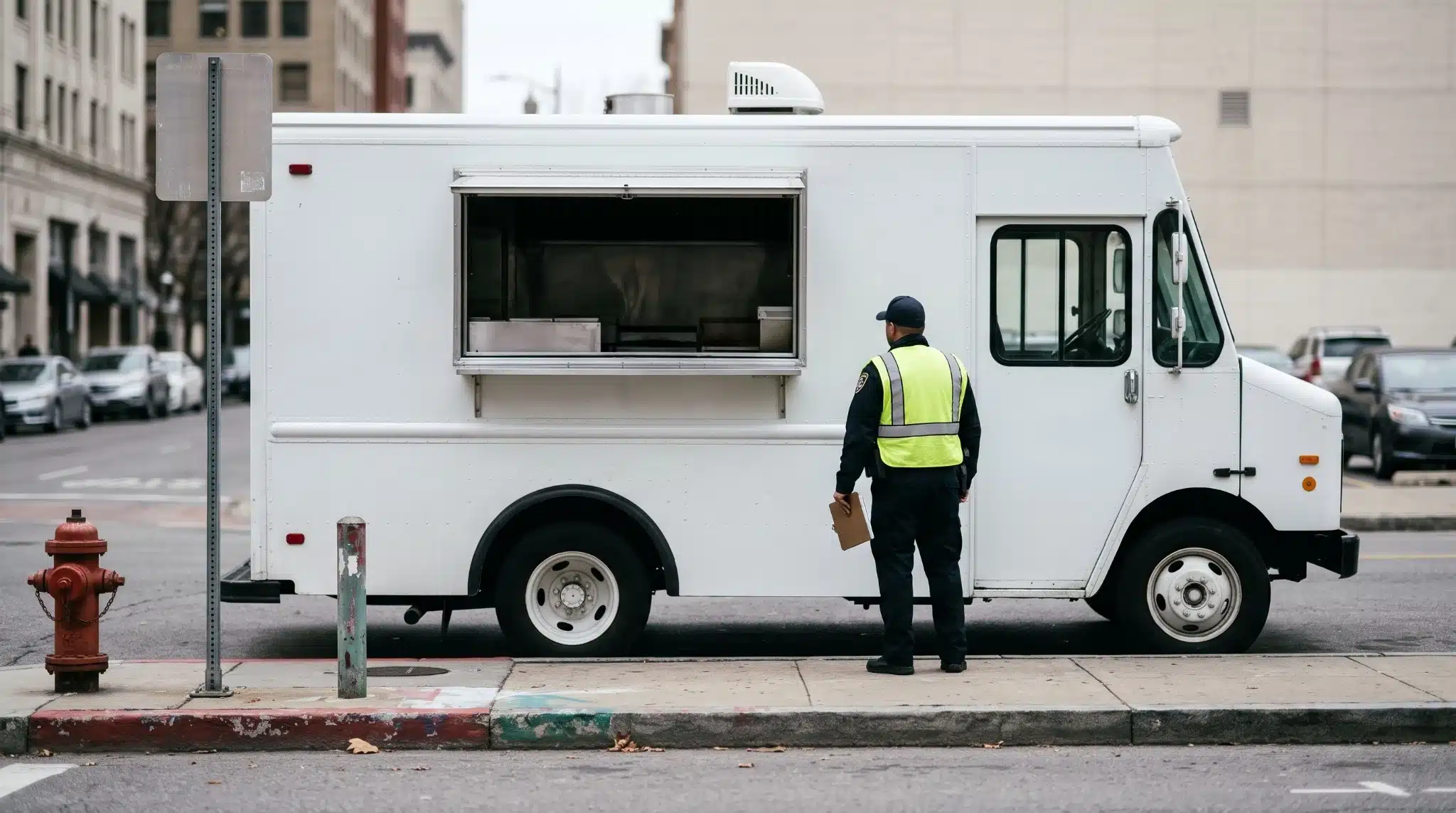
An owner in Tulsa hears that Oklahoma passed a food truck freedom law. She books an event in a town she has never worked. She parks the trailer, opens the window, and starts selling. Twenty minutes later a code officer walks up and asks for her fire permit, her city business license, and proof that the lot allows food vending. She has none of the three. She thought freedom meant she could go anywhere.
So what is a food truck freedom law? It is a state law that forces cities and counties to honor your health license or inspection from somewhere else within the same state. You stop paying for the same health inspection in every jurisdiction you enter. That is the core promise, and it is a good one. It does not cancel your fire permit, your business license, local fees, or zoning rules. Each state writes its own version, and the details matter more than the name.
This post walks through five states: Washington, Texas, Florida, Oklahoma, and Alabama. Each one frees you from something different. Each one leaves something in place.
Key Takeaways
- A food truck freedom law removes duplicate health licensing or inspections, not every permit you need to operate.
- Fire permits, business licenses, and zoning rules still apply in most states, and local officials still enforce them.
- Florida limits local licenses and fees the most, while Alabama and Washington leave local business licensing in place.
- Texas and Oklahoma use one state license, yet both still let local governments control where you park and how you meet fire code.
- Laws change fast, so verify every rule with the state agency and the local office before you roll into a new town.
Why Did States Pass Food Truck Freedom Laws?
The pain behind these laws is real. For years, crossing a county line meant a new application, a new plan review, a new inspection, and a new fee. Operators lost a full day of sales to sit through an inspection in a town they might work twice a year.
Texas shows the scale. Before its new law, Dallas charged a truck new to the city a $481 application fee and a $562 plan review fee, plus $185 for the annual permit. Amarillo charged between $800 and $900. An Amarillo trailer owner told The Texas Tribune that permits and fees took three to five percent of her profit.
The old patchwork cost operators money and growth. Still, the name “freedom” does damage of its own. It sounds like the whole rulebook went away. Operators read the headline, skip the statute, and stop asking questions. That is how a good law turns into an expensive citation.
Cities are not the villains here, either. Permit fees paid for inspectors, and inspectors respond to complaints. Dallas County told the Tribune it expects to keep responding to complaints even without the permit revenue. Austin officials worried that moving enforcement to the state could slow the response to real hazards. Those concerns do not make the law wrong. They explain why local governments hold on to what they still can.
What Does a Food Truck Freedom Law Actually Say in Each State?
Five states, five models. Washington recognizes plan reviews. Texas and Oklahoma create one state license. Florida preempts local licenses and fees. Alabama will recognize one health certificate and one fire certificate starting in January 2027. Here is what each one does, and where each one stops.
Washington: Reciprocity for Plan Review, Not a Free Pass
Washington has no law with the freedom label. It has a reciprocity statute, RCW 43.20.149, in effect since May 1, 2020. If you hold a valid permit from one health authority, a second authority must accept your approved plan review. You hand over your current permit, your approved plan review, your latest inspection report, and your commissary agreements.
The second authority can still ask for restroom agreements and some commissary agreements. It can also charge an annual permit fee. It cannot charge a plan review fee or an inspection fee. So you still hold a permit in each health jurisdiction. What you skip is the duplicate review and the duplicate review fee.
Fire is a different story. The industry backed House Bill 1134 in 2019 to create one statewide fire permit that every city would honor. Local reporting says that bill failed. Some King County fire marshals later agreed to standardize their inspections on their own. Elsewhere, cities commonly require local fire department approval, according to MRSC, a nonprofit that advises Washington local governments.
Licensing and zoning stay local. The truck itself needs a state Labor and Industries permit and inspection. The business needs a state business license, and many cities require a local license too. Longview limits trucks to certain zoning districts and requires a temporary use permit for each site. Marysville limits hours, bans trucks from residential zones, and keeps them 100 feet from eating and drinking establishments. Trucks on public property trigger a leasehold excise tax. Hosting a truck on private property can trigger transportation impact fees.
Texas: One State License, Local Control Over Place and Fire
House Bill 2844 created Chapter 437B of the Texas Health and Safety Code. Since July 1, 2026, a mobile food vendor needs a license from the Texas Department of State Health Services (DSHS). Each food vending vehicle needs its own license. A local authority cannot prohibit a licensed vendor who follows the other state and local laws that do not conflict with the chapter.
Freedom costs money. DSHS estimates the initial application and pre-licensing inspection will run $300 to $1,350, depending on license tier. Renewal runs $300 to $850 a year, and some trucks will pay up to $500 per inspection. Vendors who sell only prepackaged food paid nothing in some cities, and they now pay state fees too.
Cities lose their permit and inspection fees but keep fire and zoning. Lewisville tells vendors that a state permit does not exempt them from local rules on where and how a unit may operate. Denison says state licensure does not override local zoning, parking, or location restrictions. Denison also says it may still inspect for fire and safety. The bill’s author put it plainly: the law “really only has to do with the health inspection permit authority.”
Florida: The Strongest Preemption, With a Catch
Florida Statute 509.102 hands licenses, registrations, permits, and fees for mobile food dispensing vehicles to the state. A city or county cannot require a separate license, registration, or permit beyond the state license. It cannot charge a fee beyond the state fee as a condition of operating. It also cannot ban mobile food dispensing vehicles across its whole jurisdiction. Florida’s fee rule, 61C-1.008, lists a $347 annual total for a mobile food dispensing vehicle.
The catch is subsection (4). The statute leaves local authority to regulate how these vehicles operate. Hernando County’s 2020 ordinance acknowledges that the state preempts licensing, then sets location rules. One Florida town’s 2024 ordinance limits trucks to dawn-to-dusk hours in most cases and bars them from interfering with required parking. Airports and seaports sit outside the statute entirely.
The text speaks to licenses, registrations, permits, and fees. It does not mention fire code. Ask your local fire marshal how fire inspections work where you plan to operate.
Oklahoma: The Food Truck Freedom Act
Oklahoma wrote the name into law. House Bill 1076, the Food Truck Freedom Act, took effect November 1, 2025, according to the Oklahoma State Fire Marshal. A vendor with an Oklahoma State Department of Health (OSDH) food establishment license can operate in any local jurisdiction. You give the local authority a copy of your license, and it must recognize it. Tulsa County and Oklahoma County run licensing through city-county health departments. A license from a local authority in either county counts statewide.
Local governments keep tools. A local authority may issue its own license or permit, but the fee cannot exceed its administrative cost. Vendors may operate in any zoning district where food service establishments are allowed, with the property owner’s permission. In residential zones, a vendor may operate with a resident’s permission for up to 12 days a year. Vendors serving at a mass gathering must notify OSDH and the local authority within 10 days.
The law also limits local governments. A local authority cannot require a vendor to name it as an additional insured, unless the event is sponsored by the local authority or held in a local park.
Fire stays separate. A companion law, House Bill 2459, covers food truck fire safety. The Tulsa Health Department says vendors need permits from OSDH, the State Fire Marshal, and the Oklahoma Liquified Petroleum Gas Administration. Out-of-state trucks must meet Oklahoma’s requirements and its fire and life safety code.
Alabama: One Health Certificate and One Fire Certificate, Starting January 2027
Alabama Senate Bill 197 became Act 2026-398 after the governor signed it. The act took effect July 1, 2026, but its main provisions start January 1, 2027, according to ABC 33/40. Until then, follow your local rules.
Starting in 2027, you need one health inspection certificate from the county where your commissary sits and one fire inspection certificate from an authorized fire department. Cities and counties cannot require additional routine health or fire inspections if you hold both. The sponsor, Senator Dan Roberts, described the fire sticker as good for six months.
Local power stays. Cities can still require business licenses, enforce zoning, set parking restrictions, and apply other operating ordinances. Officials can still inspect at any time, and they can shut down a truck they find unsafe. Operating without valid certificates is a Class C misdemeanor, with a possible fine up to $500 and up to three months in jail, according to the Alabama Reflector.
Birmingham shows what changes. Today the city says you must pass a Birmingham fire inspection before you get a city business license, even if another city already inspected you. You also need a Jefferson County Department of Health permit and a mobile vendor permit with proof of insurance. The city says it is reviewing the new law.
What Is the Four Gates Test for Food Truck Permits?
Every time you work a new town, you walk through four gates.
First, the Health gate: can you serve food safely? Second, the Fire gate: can your equipment and propane run there without hurting anyone? Business comes third. Does this town know you are working there, and have you paid what it charges? Last is the Place gate. Can you park this truck at this spot at this hour?
A freedom law, at its best, opens the Health gate. Alabama adds the Fire gate in 2027. Oklahoma and Florida limit what the Business gate can charge. Nobody opens the Place gate. Zoning is among the oldest powers a city holds, and the legislators who wrote these laws left it alone on purpose. The Texas author said so in plain words.
So freedom, as I see it, means knowing which gate you stand at. Here is how the five states line up.
| State | Health gate | Fire gate | Business gate | Place gate |
| Washington | Plan review accepted. Annual permit fee allowed. | No statewide fire permit. Local approval is common. | State and local business licenses | Local zoning, hours, and right-of-way rules |
| Texas | One DSHS license, since July 1, 2026 | Local fire code applies | Local ordinances unrelated to food safety permitting remain | Local zoning and location rules |
| Florida | One state license. Local licenses and fees barred. | Statute is silent. Ask the fire marshal. | Statute bars a local license, permit, or fee as a condition of operating. Verify any local business tax. | Local operating rules such as hours and parking |
| Oklahoma | One OSDH license, recognized statewide | State Fire Marshal permit | Local license allowed. Fee capped at administrative cost. | Zoning applies. Residential stops capped at 12 days a year. |
| Alabama | One health and one fire certificate from January 1, 2027 | Same certificate. Officials can still inspect. | Local business license remains | Local zoning and parking rules remain |
How Do You Use the Four Gates Before Your First Event in a New Town?
I teach location selection as a numbers game, and permits belong in the numbers. A new town has a cost. That cost may be a business license, a temporary use permit, a fire inspection, or a county fee. Your job is to know the true cost and price the event to cover it.
A statewide license also changes where you can go, not how much you can serve. Your truck still has a capacity ceiling set by storage, cook space, prep space, staffing, and speed of service. More territory without enough capacity just means longer lines in more places.
Run the gates before you commit. The steps below take about an hour per new town, and they cost far less than one citation.
What Steps Should You Take Before You Roll Into a New City?
- Confirm your license and its effective date. Pull your state license or inspection certificate and check when the law took effect. Texas licensing began July 1, 2026. Alabama’s recognition starts January 1, 2027. A law that passed is not always a law in force.
- Call the fire authority, not just the health department. Ask who issues the fire permit, how often it renews, and whether the town honors another jurisdiction’s tag. Write down the name of the person you spoke with and the date.
- Ask for the business license rule in writing. Call the city clerk or finance office. Ask whether a license, tax registration, or event permit applies, and what it costs. Alabama and Washington still allow local licensing. Florida’s statute limits it.
- Check zoning and location before you book. Look up the zoning district, the allowed hours, the distance from restaurants, and any residential limits. Oklahoma, for example, caps residential stops at 12 days a year.
- Add the true cost to your event price. Total the license, the fees, the insurance, the travel, and the labor. If the town’s costs push the event below your breakeven, raise your minimum or pass. Our post on how to know if an event is worth booking walks through the math.
- Keep a compliance folder in the truck. Carry your license, your latest health certificate, your fire tag, your insurance, and your business license. A code officer will ask for them, so hand them over fast.
- Verify with the agency, not an AI summary or a Facebook thread. AI can help you find the right statute. It can also miss a recent amendment or a local ordinance. Confirm anything about permits, fire, or fees with the state agency and the local office before you act.
Frequently Asked Questions
Does a food truck freedom law mean I can operate anywhere in my state?
No. These laws make local governments recognize your health license or inspection. They do not guarantee you a place to park. Zoning, hours, parking rules, fire requirements, and in most states a local business license still apply. Confirm where you may legally set up before you book an event or open your window.
Can a city still charge me fees under a food truck freedom law?
It depends on the state. Oklahoma lets a local authority charge a license fee capped at its administrative cost. Alabama keeps local business licenses in place. Washington allows an annual permit fee but bars plan review and inspection fees. Florida bars local licenses and fees as a condition of operating. Read your state’s statute.
Do I still need a fire inspection or fire permit?
Usually, yes. Texas leaves fire code to local officials, and Oklahoma adds a State Fire Marshal permit. Alabama will honor one fire certificate statewide starting in January 2027, but officials can still inspect. Washington has no statewide fire permit. Call the fire authority in every town where you plan to work.
Do freedom laws apply to out-of-state food trucks?
Usually not automatically. Oklahoma requires out-of-state trucks to meet its food truck and fire and life safety rules. Texas requires a DSHS license for any mobile food vendor operating in the state. Washington requires a Labor and Industries permit and inspection. Check the destination state’s rules before you cross the border.
How do I know whether my state’s rule has changed?
Rules move quickly. Texas licensing began in July 2026, and Alabama’s core provisions start in January 2027. Check your state health department and fire marshal websites, read the current statute, and call the local office before booking. Never rely only on a social media post or an AI summary.
Which Gate Are You Standing At?
Go back to that owner in Tulsa. She did nothing careless. She believed a name. The law gave her one gate, and nobody told her about the other three.
You can do better, and it does not take a lawyer. It takes a phone, a list of questions, and the discipline to ask before you park. Learn which gate each rule opens. Learn which gates still have a keeper. Then price your events like an operator who knows the real cost of showing up.
A law can open one gate. Knowing the other three is still your job.
This post summarizes public sources as of October 2026. It is not legal advice. Statutes, fees, and effective dates change, so confirm every rule with your state agency and your local office.
Keep Learning
- Why Do Restaurant Associations Keep Pushing Food Truck Distance Laws? Why the Place gate gets tighter even when the Health gate loosens.
- How Do You Know If a Food Truck Event Is Actually Worth Booking? A way to price the true cost of a new town into your event decision.
- Propane Safety Isn’t Optional: What Every Food Truck Operator Needs to Know What fire officials look for at the Fire gate.
- What Food Truck Insurance Coverage Do You Actually Need? The coverage that cities and event hosts ask about.
- Food Safety Certification: What Food Truck Operators Need to Know The training behind the Health gate.
Bill Moore is the Founder and Executive Director of the National Street Food Vendors Association (NSFVA), a trade association dedicated to advocacy, education, and unifying street food vendors nationwide. He has worked in food service since 1977, and his first street food vending was in 1981. Bill hosts the “10-Minute Food Truck Training” podcast, leads NSFVA’s weekly Mini Class and group coaching sessions, and is the author of Food Truck 101: Beginner to Winner and, with Melisa Moore, Food Truck 201: Get Off the Truck!