The people writing the rules for your industry are often the ones competing against you. Most food truck owners never find that out until it costs them a parking spot.
The biggest threat to a food truck’s survival was never the weather. Not even the equipment breakdowns, or even a slow lunch rush. It was the assumption that the rules of the road are neutral.
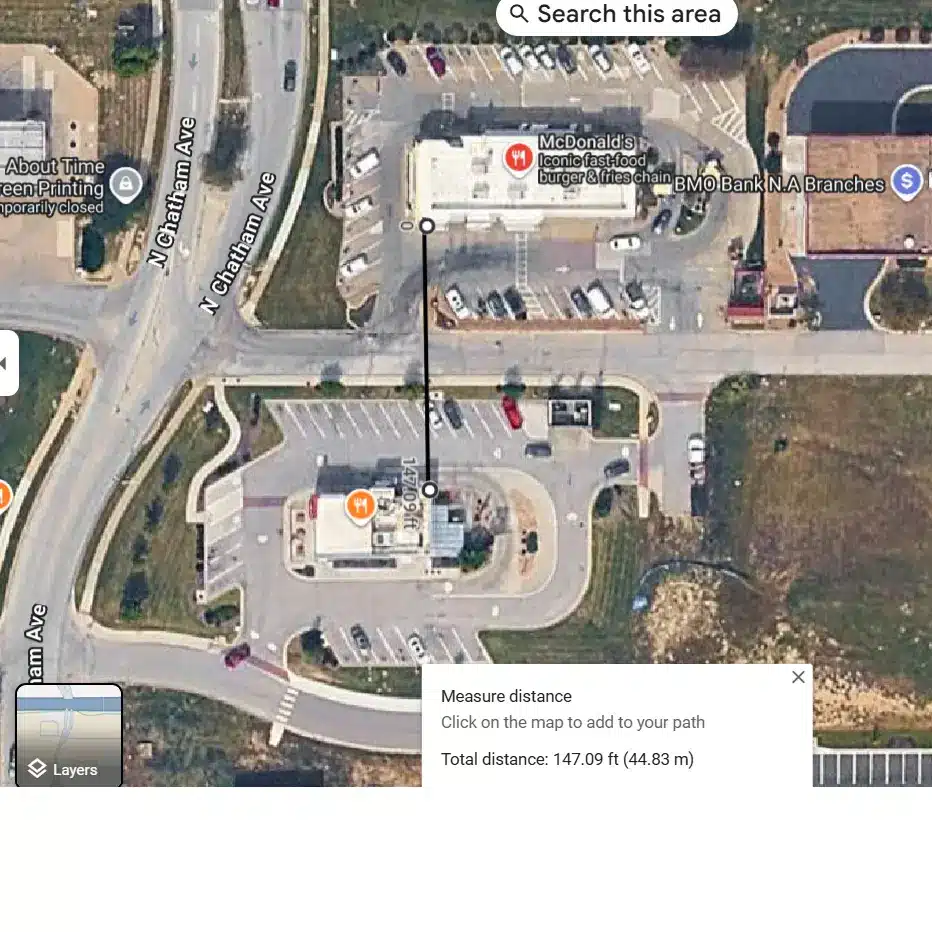
They are not. In city after city, restaurant associations, have spent years lobbying for food truck distance laws. These are ordinances that ban a truck from parking within 100, 150, 200, or even 300 feet of a restaurant. Illinois has one of the toughest in the country. Kansas City just made theirs six times stricter. Without knowing this history, you’re walking into a fight you didn’t know you were in.
This isn’t a conspiracy theory. It’s public record. Just check court filings, council minutes, and on-the-record quotes from restaurant association leaders explaining exactly why they wanted these laws. Let’s walk through what actually happened, then talk about what it means for how you run your business.
KEY TAKEAWAYS
- The National Restaurant Association through a formal “Unified Partner Agreement,” lets state affiliates fight against food trucks.
- Chicago’s 200-foot rule, backed by an amicus brief from the Illinois Restaurant Association, survived a six-year court fight. It was upheld by the Illinois Supreme Court in 2019.
- Kansas City voted in 2026 to expand its food truck buffer zone from 50 feet to 300 feet. A change pushed by the Greater Kansas City Restaurant Association.
- These laws are almost always framed as “fairness” or “leveling the playing field,” language. You must recognize when it shows up in your own city council chambers.
Your best defense isn’t outrage. It’s showing up before the ordinance gets written, not after.
Why Does This Keep Happening to Food Trucks?
Here’s the honest answer: because it works, and because most food truck owners don’t organize until after the vote.
A brick-and-mortar restaurant pays property tax or a long-term lease. It’s been a fixture on Main Street for years. When a food truck shows up and pulls a lunch crowd away from that restaurant’s front door, the owner doesn’t see a competitor exercising the same right to earn a living. They see an outsider with lower overhead cutting the line.
I understand that frustration. I’ve sat on both sides of the counter in this industry since the Carter administration. But understanding where the frustration comes from doesn’t mean the response is fair. And it doesn’t mean you should be caught flat-footed when that frustration turns into a 200-foot rule. That rule can keep your truck out of the exact commercial corridor where your customers already are.
The pattern shows up over and over. A restaurant association identifies food trucks as a competitive threat. It brings that concern to a city council member, sometimes one who owns a restaurant himself. The council passes a distance ordinance framed as protecting jobs, tax base, or “neighborhood stability.” Food truck owners find out when they get a ticket, not when the ordinance was drafted.
What Does the Record Actually Show?
I don’t want you taking my word for this, so here’s the paper trail.
Illinois: The 200-foot rule and a six-year legal fight. Chicago’s mobile food vendor ordinance, adopted in 2012, bans food trucks from parking within 200 feet of any brick-and-mortar restaurant. It also requires them to carry GPS tracking devices, with fines up to $2,000 for violations. Alderman Tom Tunney, a former chairman of the Illinois Restaurant Association, helped draft the ordinance. When two food truck owners sued the city, the Illinois Restaurant Association filed an amicus brief in the Illinois Supreme Court. That brief defended the ordinance as a “fair and legitimate compromise” that protects restaurants as long-term investors in the community. The court sided with the city in May 2019. According to the Institute for Justice’s National Street Vending Initiative. The food truck numbers in Chicago dropped by more than 40 percent after the rule took effect. The industry is still growing nationally.
Kansas City: from 50 feet to 300 feet. In 2026, Kansas City’s city council expanded the required distance between food trucks and restaurant entrances. Going from 50 feet to 300 feet. Plus added fines up to $500 or jail time for violations. Mike Burris, executive director of the Greater Kansas City Restaurant Association, told KCUR that the old 50-foot rule put trucks at “an uncomfortable distance” from restaurant doors. Further stating multiple trucks could cluster right outside a restaurant during peak events. The council passed it unanimously, just months before the city expected a surge of visitors for the World Cup.
Louisville: distance rules that follow you onto private property. Since 2011, Louisville has banned food trucks from operating within 150 feet of any restaurant selling similar food. Including even on private property, unless the restaurant gives permission. A requirement they don’t require of any other businesses. Two truck owners, backed by the Institute for Justice, are still fighting that restriction in court.
Washington, D.C.: In 2011, Andrew Kline, then head of legislative affairs for the Restaurant Association of Metropolitan Washington, D.C., told reporters plainly what the concern was. When a popular food truck parks in front of a restaurant, he said, “people see the crowd, they don’t want to come to the restaurant.” That’s not a public safety argument. That’s a competition argument, dressed up in policy language.
Albuquerque and Branson: smaller cities, the same playbook. Albuquerque adopted a 100-foot buffer after restaurant complaints in 2015, later reduced to 75 feet. Branson, Missouri, has run a 100-foot rule for years. Different sizes of cities, same underlying dynamic. An organized restaurant lobby gets a distance rule written into the code before food truck owners know there’s a fight to join.
The national office: closer than it wants you to think. Here’s what I found when I went looking for where the National Restaurant Association draws the line. It doesn’t draw one. The NRA operates under a formal agreement with its state affiliates called the Unified Partner Agreement. That agreement spells out who handles what. It lets the NRA market the whole network as, in its own words, “a truly national structure.” Join your state restaurant association, in most cases, and you’re a National Restaurant Association member too. That’s not a loose informal partnership. That’s an organizational choice, renewed year after year.
What I could not find, anywhere in the NRA’s public materials, is a code of conduct that governs what a state affiliate lobbies for. I also couldn’t find a single example of the national office publicly distancing itself from a chapter running a protectionist campaign against food trucks. The NRA has an event code of conduct for who gets thrown out of its conferences. It has no equivalent standard for who gets to keep using its name while pushing a 200-foot rule through a city council.
If the National Restaurant Association genuinely saw mobile vendors as fellow restaurant operators, an argument it could easily make since a truck is a restaurant on wheels. It has the structure in place to say so and to hold its affiliates to it. It hasn’t. Silence from the top, while the state chapter takes the local heat and the public relations risk, isn’t neutrality. It’s plauable deniability.
Here’s the Reframe Every Food Truck Owner Needs to Hear
Stop thinking of this as “restaurants versus food trucks.” That keeps you angry and keeps you reactive. Think of it instead as what it actually is. A fight over who gets a seat at the table when the rules get written.
Every food truck owner I coach knows their food cost percentage. Very few of them know their city council member’s name. Or that the group opposing them locally answers to a national organization that could set a standard and chooses not to. That’s backwards. The restaurant associations that win these fights don’t win because their argument is better. They win because they show up before the vote, with data, with a lobbyist, with relationships already built. Plus a national parent organization that lets them do the fighting while the nations group stays out of the story. The mobile vending side of the room, meanwhile, shows up empty, or doesn’t show up at all.
You don’t need a law degree to compete in that room. You need to be there before the ordinance is drafted, not after it passes.
What This Means for How You Actually Run Your Truck
This is where the lesson turns practical, because knowing the history doesn’t pay your bills. Acting on it does.
Owners must treat their relationship with local government the same way they treat their relationship with their commissary or their suppliers. As a real line item in the business, not an afterthought you deal with only when something goes wrong. Imagine a truck that’s been going to council meetings. Or sponsoring a downtown event, and getting to know the small business liaison for two years. That truck has a completely different standing than one that shows up to a hearing for the first time. Especially the same week an ordinance is about to pass.
The restaurants organizing against you aren’t wrong that they have real overhead and real stakes in their neighborhoods. They’re not wrong to advocate for themselves. What’s wrong is a food truck industry that lets that advocacy go unanswered. All because nobody thought it was their job to show up.
Steps You Can Take This Month
1. Find your current local ordinance in writing. Don’t rely on what another vendor told you or what you assumed. Pull the actual municipal code section covering mobile food vending, distance rules, and time limits. If you can’t find it, call your city clerk’s office and ask directly.
2. Identify who’s already organized against you. Search for your state or metro restaurant association. See whether food truck distance rules, permitting, or zoning show up anywhere in their public advocacy or news coverage. You want to know if there’s already an active push before it lands on a council agenda.
3. Get on your city council’s public meeting notification list. Most cities let you sign up for agenda alerts by email. This is the single easiest way to see a proposed ordinance before it’s a done deal instead of after.
4. Build one real relationship with a council member or economic development staffer. Not a complaint, a relationship. Invite them to your truck. Explain what you actually pay in commissary fees, health permits, and insurance. Most council members have never heard the real cost structure of running a mobile food business.
5. Document your economic contribution. Track the events you vend, the local suppliers you buy from, the taxes you pay, and any jobs you create. When a hearing happens, “we’re a real business that supports this local economy” needs numbers behind it, not just a good story.
6. Join or support an organization built for this fight. Individual truck owners rarely have the time or leverage to track ordinances city by city. That’s exactly why NSFVA exists: to give street food vendors one collective, organized voice instead of forty individual ones showing up too late.
7. Show up before there’s a fire to put out. Attend one city council or small business commission meeting this quarter, even if nothing about food trucks is on the agenda. Presence builds relationships. Relationships are what get you a phone call before an ordinance drops instead of a citation after it passes.
Frequently Asked Questions
Is the National Restaurant Association the same organization fighting food trucks in cities like Chicago?
Not the one filing the local briefs, no. That work is usually done by state affiliates like the Illinois Restaurant Association. But those affiliates operate under a formal agreement with the national office and are marketed as part of one national structure, and the NRA has never publicly set a standard against this kind of lobbying or distanced itself from a chapter that runs it.
Are food truck distance laws legal?
Generally, yes. Courts, including the Illinois Supreme Court in 2019, have repeatedly upheld distance ordinances as a legitimate exercise of local government authority, even when the stated purpose is protecting existing businesses from competition.
What is the most common distance required between a food truck and a restaurant?
It varies widely by city, from as little as 50 feet to as much as 300 feet, with 100 to 200 feet being common. Always confirm the exact figure and enforcement hours in your specific city’s municipal code, since it changes from one jurisdiction to the next.
Can a restaurant association really change local law without food truck owners knowing?
Yes, and it happens regularly. Ordinances often move through committee and council with public notice that most working vendors never see, because they’re focused on running their truck, not tracking a city’s legislative calendar.
What’s the single most effective thing a food truck owner can do about this?
Show up to local government before there’s a proposed ordinance to react to. Relationships and data built over months carry far more weight than a crowd of angry vendors at a single hearing after the vote is already scheduled.
The Bottom Line
Every food truck owner I’ve coached wants to talk about menu, food cost, and marketing. Those matter. But none of it matters if you can’t legally park where your customers are. The restaurant owner down the street protecting their own turf, I understand that, even when I disagree with the method. The national trade group that built the network, cashes the dues, and never once said “not like this” is a different matter. The only mistake is assuming nobody’s fighting for the other side of that ordinance while you’re too busy running your window to notice.
Show up to the table. Nobody’s going to save you a seat.
Bill Moore is the Founder and Executive Director of the National Street Food Vendors Association (NSFVA), a trade association dedicated to advocacy, education, and unifying street food vendors nationwide. He has worked in food service since 1977, and his first street food vending was in 1981. Bill hosts the “10-Minute Food Truck Training” podcast, leads NSFVA’s weekly Mini Class and group coaching sessions, and is the author of Food Truck 101: Beginner to Winner and, with Melisa Moore, Food Truck 201: Get Off the Truck!