Every food truck owner understands the appeal of extra cash.
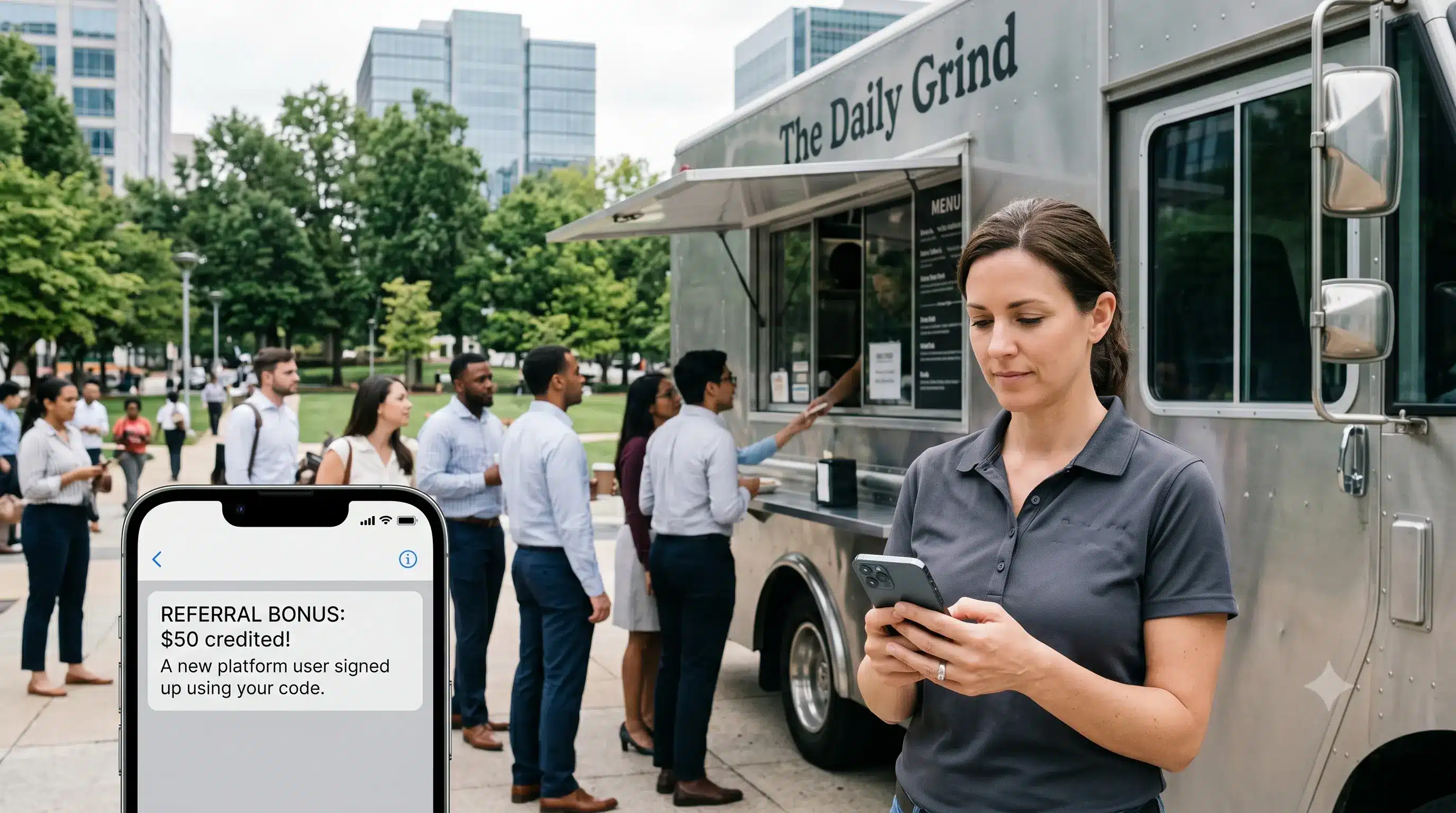
When someone says, “You can make money just by sharing this referral link,” it sounds simple. No extra prep. No extra service window. No food cost. No dishes. No fryer oil. Just post a link and maybe collect a bonus. That is the attraction behind programs like the DoorDash merchant referral offer.
DoorDash currently promotes a merchant referral program where an eligible referrer may receive $1,000 after a referred restaurant signs up and completes 15 orders within 60 days. The referred merchant may also receive $500. DoorDash lists food trucks among the eligible merchant types.
At first glance, that sounds like easy money. But from a food truck business standpoint, the better question is not:
“Can I make $1,000?”
The better question is:
“Whose business am I spending my time building?”
The Referral Bonus Turns Food Truck Owners Into Marketers
A food truck owner who shares a referral link is not just passing along information. They are promoting DoorDash. They are using their time, their credibility, their audience, and often their food truck community relationships to help DoorDash recruit more merchants.
Food truck owners already struggle to find enough time to market their own businesses. They are cooking, prepping, shopping, cleaning, booking events, fixing equipment, managing staff, answering messages, and trying to stay profitable.
So before spending that limited time promoting a delivery platform, the owner should ask:
Would this same effort produce a better return if I used it to market my own food truck?
The answer is yes.
The Food Truck Owner Is Taking the Risk
The $1,000 referral bonus may sound attractive, but the referrer does not control the outcome. For the bonus to pay, the referred business generally has to:
- Sign up properly.
- Be eligible.
- Activate successfully.
- Complete the required orders.
- Do it within the required time window.
- Stay connected to the correct referral link.
- Avoid anything that disqualifies the bonus.
That is a lot of dependency on someone else’s actions. The food truck owner can spend time posting, answering questions, explaining the program, and defending the idea, but still never receive the referral money if the other business does not complete the requirements.
That is not guaranteed income. That is a gamble.
DoorDash Is Buying Merchant Acquisition
DoorDash is not offering referral bonuses because the first 15 orders are worth $1,500 by themselves. That math does not work, and should be red flag to a business owner.
DoorDash’s merchant pricing information says restaurants can choose different delivery commission plans, commonly described as 15%, 25%, or 30%, depending on the plan and tools selected.
Even if a referred food truck completed 15 orders at $25 per order, that would only be $375 in gross food sales. At a 30% commission, that would be about $112.50 in commission before other costs are considered. So to Door Dash this is not about making money on 15 orders and sharing the wealth. It is about merchant acquisition.
DoorDash is trying to add more restaurants, food trucks, and food businesses to its marketplace. More merchants create more options for customers. More options can make the app more useful. More active merchants can create more future order volume FOR DOOR DASH not you.
The food truck owner must ask “does this make financial sense me?”
The Real Cost Is Opportunity Cost
Opportunity cost is what you give up when you choose one use of your time over another activity. For a food truck owner, every hour matters. An hour spent promoting someone else’s referral program could have been spent promoting:
- Your weekly location schedule.
- Your catering calendar.
- Your loyalty program.
- Your text message list.
- Your email list.
- Your Google review link.
- Your best-selling menu item.
- Your upcoming event.
- Your private party availability.
- Your own website.
That is the real issue.
The problem is not that a food truck owner could possibly earn a referral bonus. The problem is that many food truck owners need better marketing for their own truck first.
If your own catering calendar is empty, why are you marketing DoorDash?
If your own social media is inconsistent, why are you posting referral links?
If your own Google Business Profile needs reviews, why are you building traffic for a delivery app?
If your own customers do not know where you will be this weekend, why are you spending time trying to recruit merchants for someone else?
The Door Dash Platform Gets the Brand Benefit
When a food truck owner promotes a DoorDash referral link, DoorDash receives the brand exposure. People see the DoorDash name, not yours. They hear about the DoorDash program, not your food. They talk about DoorDash and ALL the other options for food on it. They click a DoorDash link not yours.
The food truck owner may or may not get paid. That is a very different situation from promoting the food truck’s own brand.
When a food truck owner posts about catering, the brand being built is the food truck NOT DD.
When they promote a loyalty program, the relationship being built belongs to the food truck NOT DD.
When they collect emails or phone numbers, the customer list belongs to the food truck NOT DD.
When they ask for Google reviews, the reputation being improved belongs to the food truck NOT DD.
When they share their location schedule, the traffic goes to their window NOT DD.
That is the difference between building owned demand and rented fleeting attention.
Food Truck Owners Should Prioritize Their Own Marketing First
A food truck is not just a kitchen on wheels. It is a brand, a location-based business, a catering business, a community business, and a repeat-customer business. That means the owner’s first marketing responsibility is to create demand for their own food.
A food truck owner should focus on:
1. Location Marketing – Guests need to know where the truck will be, when it will be there, and what makes that stop worth visiting. A simple weekly location post can drive more direct business than a referral link.
2. Catering Leads – Catering is often more profitable than random app orders. One office lunch, school event, employee appreciation meal, or private party can be worth far more than a possible referral bonus.
3. Customer Lists – Social media reach is rented. A text list or email list gives the food truck a more direct way to reach guests. A truck with 500 real local customers on a text list has an asset. A truck posting referral codes for someone else is building someone else’s asset.
4. Google Reviews – For food trucks with regular locations, breweries, markets, or commissary pickup points, Google reviews can help create trust before the customer ever walks up to the window. That is long-term brand value.
5. Repeat Guest Strategy – Loyalty cards, bounce-back offers, weekly specials, and “find us next” messaging can turn one visit into many. That is how a food truck builds dependable sales.
The Referral Bonus Can Create the Wrong Behavior
The danger with a $1,000 referral carrot is that it changes the owner’s focus. Instead of thinking like a food truck operator, they start thinking like a recruiter. They may begin asking: “How many vendors can I get to sign up?”
Instead, they should be asking:
“How many guests can I get to my window?”
“How many catering leads can I generate this week?”
“How many repeat customers can I create?”
“How many people know where I will be this weekend?”
“How can I increase profit, not just activity?”
A food truck owner has to be careful about anything that makes them feel productive while pulling them away from the work that actually builds their own business.
This Does Not Mean DoorDash Is Bad
This article is not saying a food truck should avoid DoorDash.
For some food trucks, DoorDash or other delivery platforms may have a place.
It may make sense for a truck with:
- A consistent fixed location.
- A menu that travels well.
- Slow periods with unused capacity.
- A pricing model that accounts for commission.
- Staff who can handle app orders without hurting walk-up guests.
- A clear plan to pause orders during rush periods.
- A strategy for converting delivery customers into direct customers.
The issue is not whether DoorDash can ever be useful.
The issue is whether a food truck owner should spend valuable marketing time promoting Door Dash’s merchant program before they have built strong marketing for their own business.
The Better Business Question
The question should not be:
“Can I get paid for referring another vendor?”
The better question is:
“Would this same time make me more money if I used it to market my own food truck?”
For many food truck owners, the answer will be yes.
One catering booking could be worth more than the referral bonus.
A stronger weekly marketing habit could create repeat sales all season.
A better Google review strategy could drive traffic for years.
A text list could fill slow days.
A clear location schedule could prevent lost sales.
A better offer could turn casual followers into paying guests.
That is where the owner has control.
A Simple Rule for Food Truck Owners
Before promoting any referral program, ask three questions:
- Does this build my brand or someone else’s?
- Do I control the outcome?
- Would this same time create more value if I used it to market my own truck?
If the answer points back to your own business, that is where your attention should go.
Final Thought: Do Not Confuse Activity With Strategy
Posting referral links may feel like business development, but it may only be activity. Food truck owners do not need more activity. They need profitable activity. They need direct customers. They need repeat guests. They need catering leads. They need better margins. They need stronger marketing systems. They need more control over their own demand.
A referral bonus pays once. A strong food truck brand can pay every week.
That is the lesson.
The $1,000 referral bonus may look like free money, but it can quietly turn a food truck owner into an unpaid marketer for DoorDash. The owner does the posting, explaining, persuading, and follow-up, but only gets paid if someone else completes the required steps.
That same time could be spent building the food truck’s own business.
Marketing time should build the food truck’s brand, not someone else’s platform.