A food truck does not create every downtown problem just because it happens to be parked nearby.
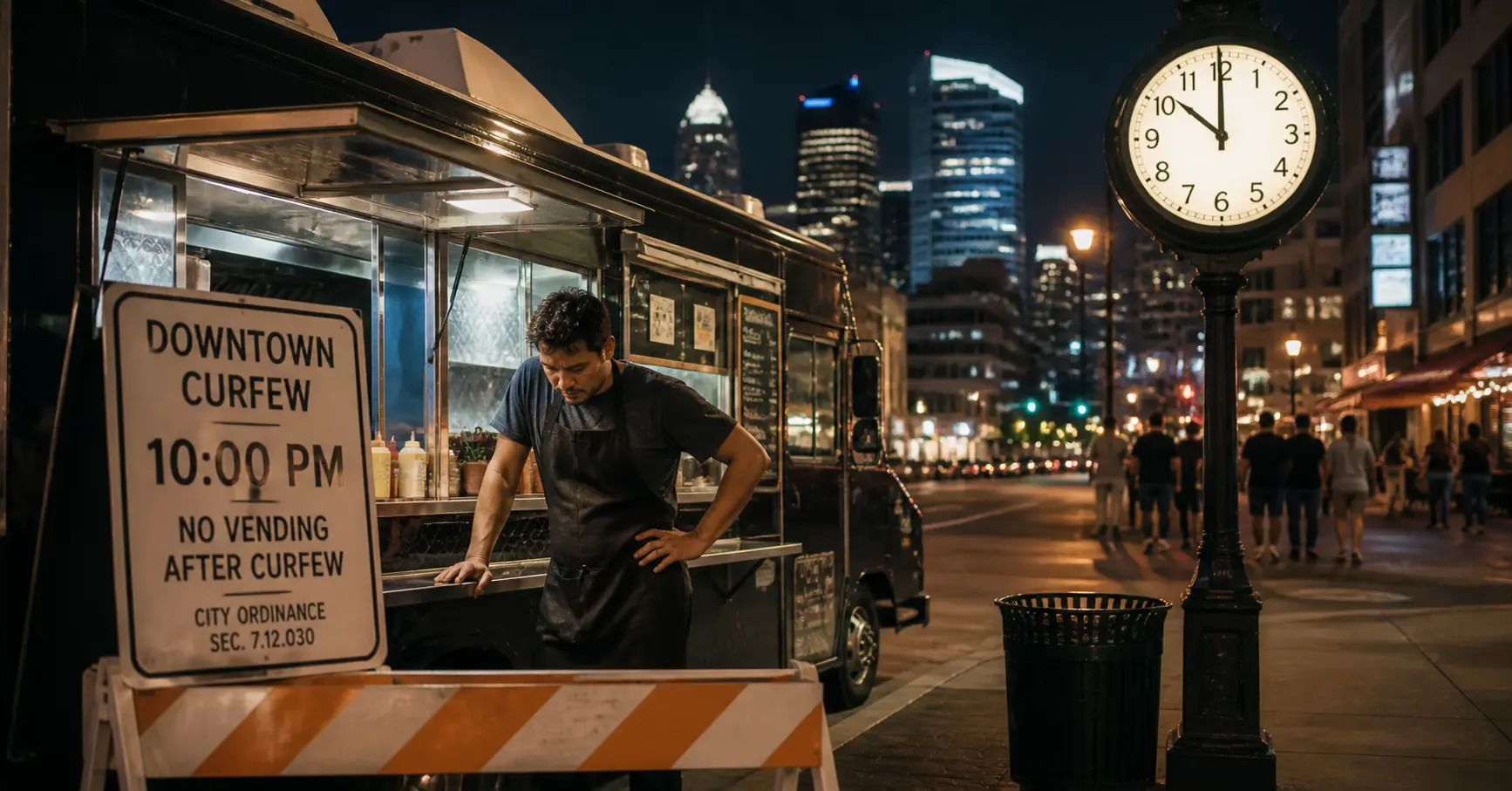
That is the bigger lesson coming out of Milwaukee, where food truck owners on Water Street are facing a new curfew requiring downtown food trucks to close by 10 p.m. starting May 9. According to local reporting, that change could cut roughly three hours from the current operating window for some vendors.
For a food truck owner, three hours is not just three hours. It may be the difference between covering labor and losing money. It may be the difference between a profitable night and a wasted prep day. It may be the exact window when the customer base is finally ready to buy. And that is why this issue matters far beyond Milwaukee.What Happened in Milwaukee
Milwaukee’s Common Council approved restrictions that will force food trucks to close earlier in certain areas, including the busy Water Street area. Local reports describe the change as a response to concerns around late-night activity, safety, and downtown crowd control. Food truck owners have pushed for a delay and have met with the mayor’s office to discuss their concerns.
Some owners have expressed optimism after those conversations, but the core concern remains: a local ordinance can directly remove sales hours from mobile vendors, even when those vendors are trying to operate legally, safely, and professionally.
What Happened in Milwaukee
Milwaukee’s Common Council approved restrictions that will force food trucks to close earlier in certain areas, including the busy Water Street area. Local reports describe the change as a response to concerns around late-night activity, safety, and downtown crowd control. Food truck owners have pushed for a delay and have met with the mayor’s office to discuss their concerns.
Some owners have expressed optimism after those conversations, but the core concern remains: a local ordinance can directly remove sales hours from mobile vendors, even when those vendors are trying to operate legally, safely, and professionally.
Why a 10 P.M. Curfew Can Be a Big Financial Hit
Where to start first?
A food truck does not make money by simply being open. It makes money when the right customers are nearby, hungry, and ready to buy. For some trucks, lunch is the prime window. For others, it is breweries, festivals, college areas, entertainment districts, or late-night crowds. A downtown night spot may not get serious until after 9 p.m. If the city forces a truck to close by 10 p.m., it may remove the most profitable part of the night.
That creates real operational problems:
- Food may already be prepped.
- Staff may already be scheduled.
- Fuel, commissary, insurance, loan payments, and permits still have to be paid.
- The truck may lose the sales volume needed to justify showing up at all.
A city may see three hours on a clock. A vendor sees lost sales, wasted labor, and a weaker return on the entire day.
Public Safety Matters — But So Does Evidence
Let’s be clear: public safety matters. Food truck owners should not ignore legitimate concerns about traffic, crowd control, blocked sidewalks, trash, noise, lighting, or emergency access. A well-run vending area needs standards. Nobody benefits from chaos.
But public safety cannot become a catch-all excuse to push vendors out of profitable spaces without evidence and conversation. The fair question is this:
Are food trucks causing the problem, contributing to the problem, or simply operating near the problem?
Those are not the same thing.
If a fight happens near a food truck, does that mean the truck caused it?
If crowds gather near food, does that mean food service is the danger?
If late-night districts need better management, should vendors be the first group restricted?
Cities should ask those questions before passing rules that directly damage small businesses.
Food Trucks Need a Seat at the Table Before Rules Are Passed
One of the most common problems in mobile vending policy is that rules are often created about food trucks before enough people talk with food truck operators.
That is backwards. Food truck owners understand the street-level realities:
- when customers actually arrive,
- where lines form,
- what trash issues really look like,
- how long service takes,
- where generators, propane, and parking create conflicts,
- what hours make an event or location financially viable.
If a city wants to solve downtown safety concerns, food trucks should be part of the solution. That could include:
- designated vending zones,
- required spacing,
- trash and cleanup standards,
- lighting requirements,
- clear closing procedures,
- better communication with police and city officials,
- staged departure times,
- permit conditions tied to behavior instead of blanket punishment.
A blanket curfew may be easy to explain politically, but easy does not always mean fair or effective.
The Bigger Industry Issue
This Milwaukee story is part of a larger national pattern. Food trucks are often praised when cities want vibrancy, entrepreneurship, tourism, and downtown activity. But when complaints arise, those same vendors can quickly become targets for restrictions. That inconsistency is exactly why the food truck industry needs organized advocacy.
Individual vendors can complain.
Organized vendors can negotiate.
An industry association can educate.
There is a big difference.
When vendors show up one at a time after an ordinance is passed, they are already playing defense. When vendors are organized before the policy is written, they have a better chance of shaping the outcome.
What Food Truck Owners Should Do When Cities Discuss Restrictions
If your city starts talking about curfews, parking restrictions, permit changes, or vending limits, do not wait until the vote is over. Take these steps early:
1. Ask for the evidence
Do not argue from emotion alone. Ask what data the city is using.
Are complaints documented?
Are police calls tied directly to vendors?
Are health or fire violations involved?
Are traffic problems caused by truck placement or by general nightlife activity?
2. Estimate the financial impact
If a rule cuts two or three hours from your operating window, calculate what that means.
Show the city what is being lost:
- average sales per hour,
- employee hours,
- food prep costs,
- permit costs,
- lost tax revenue,
- reduced late-night food access.
Numbers speak louder than frustration.
3. Offer alternatives
Do not only say, “This is unfair.”
Bring options:
- later hours with stricter cleanup,
- designated vending zones,
- vendor ID requirements,
- staggered closing times,
- security coordination,
- better trash management,
- shared standards for operators.
Cities are more likely to listen when vendors bring solutions.
4. Build a local vendor group
One truck is easy to dismiss. Ten organized vendors are harder to ignore.
Create a simple local contact list. Share meeting notices. Attend city council meetings together. Assign one or two calm, prepared speakers.
5. Stay professional
The goal is not to win a shouting match. The goal is to protect access, revenue, and credibility.
Food trucks need to be seen as responsible small businesses, not temporary outsiders.
The NSFVA Perspective
The National Street Food Vendors Association believes food vendors need fair access, clear rules, and real standards. We are not against regulation. Good regulation protects guests, operators, neighborhoods, and the reputation of the industry. But regulation should be based on evidence, not assumptions.
Food trucks should not be used as the easy answer to complex downtown problems. If a city is dealing with crime, crowds, traffic, or nightlife issues, food vendors should be included in the conversation, not automatically treated as the cause.
The industry needs safety.
The industry needs standards.
The industry also needs a voice.
Final Thought
A food truck curfew may look like a small local rule. But for the operator, it can change the entire business model.
That is the lesson from Milwaukee: city ordinances are not just paperwork. They can decide whether a vendor has access to customers, whether a night is profitable, and whether small mobile businesses are treated as partners or problems.
Food truck owners should pay attention before these rules show up in their own city. And if you are waiting until after the vote to get organized, you are already be too late.