A few years ago, it felt strange to save a credit card inside an app. Then it became normal. Then came digital wallets. Then tap-to-pay. Then automatic subscriptions. Now we barely think twice when software remembers our card, fills in our address, and completes the checkout process for us. We lost control under the guise of “convenience”.
But the next step is much bigger. And Scarier.
Visa has announced a partnership with OpenAI that will make it possible for AI agents to complete purchases using your payment information. Mastercard has also been working on its own agentic payment technology. In plain English, that means AI may not just help you shop. It will eventually be able to buy things for you. Perhaps without express permission.
For a food truck owner, that should get your attention. Because convenience is great until it starts spending your money without prudent oversight.
This Is Not Just a Tech Story
At first glance, this may sound like something for people buying shoes, laptops, or airline tickets online. But food truck owners should look at this through a business lens. You already have enough expenses moving in different directions.
Food costs change. Paper costs creep up. Commissary fees rise. Event fees hit before the event even happens. Fuel, propane, generator repairs, software subscriptions, payment processing fees, insurance, licenses, and payroll all pull from the same cash flow. You are painfully aware of every single expense.
Now imagine adding AI-driven purchasing into that system. Could an AI help reorder supplies? Yes. Could it compare prices on gloves, clamshells, cups, labels, or cleaning supplies? Absolutely.
Could it save time by finding a better deal on equipment or booking a hotel for an out-of-town event? Maybe. But could it also make the wrong purchase, choose the wrong vendor, misunderstand your instructions, or quietly renew services you no longer need? Yes. And that is where the risk begins.
The Bigger Question Is Control
The question is not whether AI can be useful. It can be and certainly well beyond the overly busy flyers and unreadable menus it produces right now. The question is how much control you are willing to give it.
Think about your food truck operation. Would you let a new employee place orders with your vendor before they understood your menu, your par levels, your prep schedule, your storage space, and your cash position? Probably not. At least I hope not. If you do sign up for coaching today.
You might let them build the order. You might let them compare pricing. You might let them suggest what needs to be reordered. But before the money leaves the account, you would want someone experienced to review it. AI purchasing should be treated the same way.
An AI agent may be able to find options, compare products, and recommend a purchase. But that does not mean it should be allowed to spend freely.
In a food truck, one bad order can create a real problem. Order the wrong size cups, and service grins to a halt. Order the wrong generator part, and you may still be down for the weekend. Order too much product before a slow event, and now your cash is tied up in inventory you may not sell.
The more automated the purchase becomes, the more important your approval process becomes.
AI Does Not Have to Be Hacked to Cost You Money
A lot of people hear about AI spending money and immediately think about hackers. That is a real concern, but it is not the only concern. The more common danger may be simpler than that: the AI may just be wrong. AI systems can misunderstand instructions. They can recommend the wrong item. They can trust bad information. They can miss key details. They can sound confident while making a mistake.
Now attach that confidence to your business debit card or credit card. That is where things get uncomfortable.
Let’s say you tell an AI tool, “Find me the best portable freezer under $900 for catering events.” It finds one. It checks the reviews. It places the order. Then it arrives and you realize it pulls too many amps for your generator, does not fit your layout, and has a delivery lead time that makes it useless for the event you needed it for.
Who made the mistake?
Was it you because you gave the AI permission? Was it the AI because it selected the wrong product? Was it the merchant because the listing was unclear to AI? Was it the payment company because the transaction was authorized?
That kind of dispute is not as simple as old-fashioned fraud. For years, the question around a suspicious credit card charge was fairly direct: did you authorize this purchase or not? But with AI purchasing, the question could become: did you authorize the AI to authorize the purchase? And the prompt you wrote now becomes evidence against you. That is a much messier problem.
Food Truck Owners Already Struggle With Expense Creep
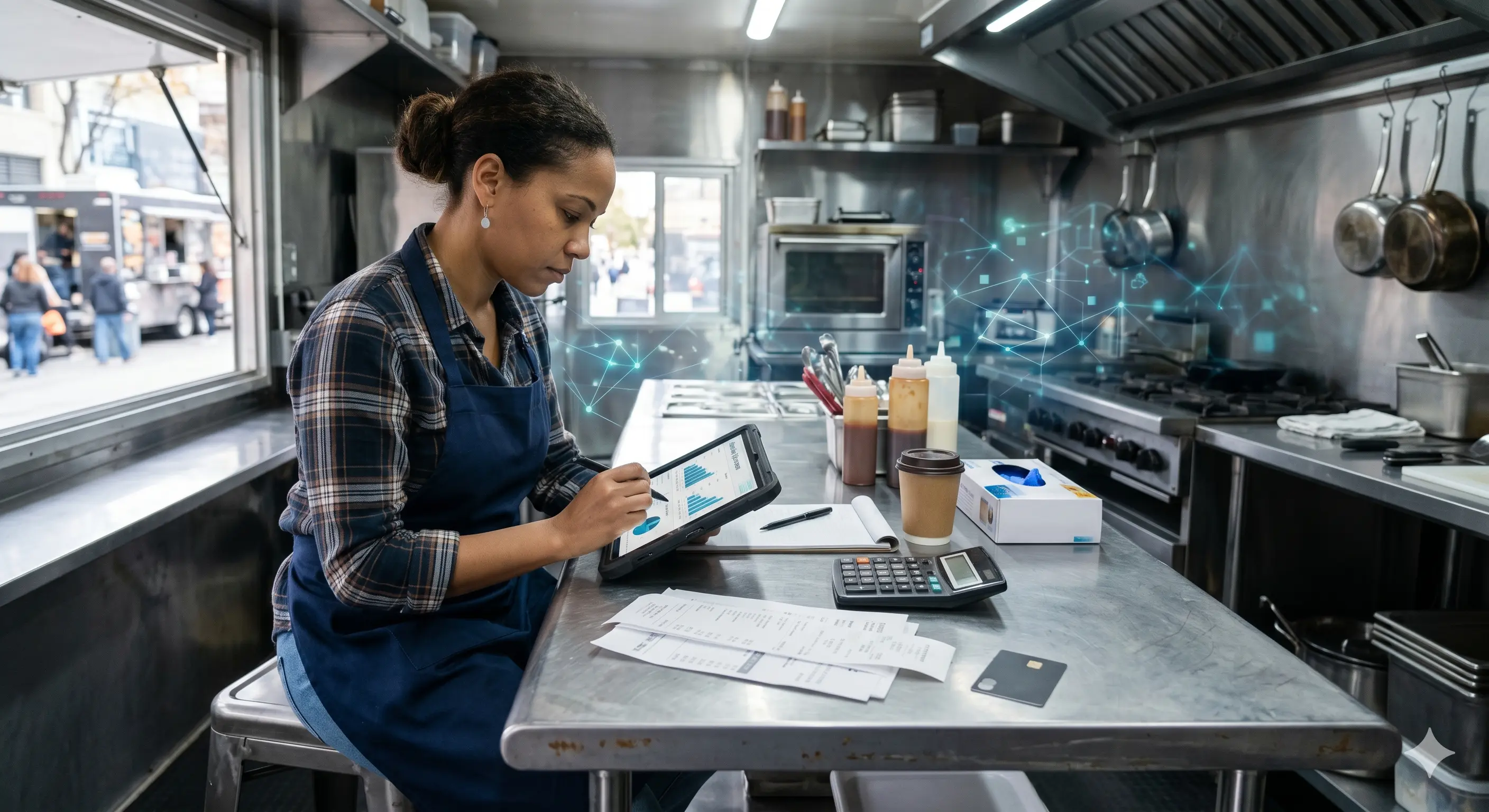
If you run a food truck, you already know how easy it is for small expenses to become big leaks. One subscription here. One app there. One monthly software tool you forgot about. One online ordering service. One marketing platform. One design tool. One extra phone line. One storage unit. One membership. One recurring fee you meant to cancel three months ago. None of them look terrible by themselves. Together, they can quietly eat your profit.
Now imagine AI helping sign up for tools, renew services, book events, purchase supplies, or manage digital subscriptions. That may create convenience, but it creates a new layer of invisible spending.
A food truck does not fail because of one bad expense. It gets squeezed by dozens of small costs that nobody reviews often enough. I say this all the time.
AI can make that better if it is used as a watchdog AND it can make it worse if it becomes another unchecked spender.
Where AI Purchasing Could Help a Food Truck
This does not mean food truck owners should reject the technology completely. Used carefully, AI purchasing could become useful. It could help compare prices on paper goods across approved vendors. It could flag when glove prices jump. It could remind you that your propane exchange cost is higher than last month. It could build a weekly supply order based on sales history. It could search for replacement parts and give you options. It could help identify duplicate subscriptions. It could review recurring expenses and ask whether each one still makes sense.
That is the version of AI I want first. Not an AI that spends money freely, like the VP of Marketing at a fast food chain. An AI that helps you make better decisions before the money is spent. That’s what you need.
There is a big difference between “buy this for me” and “show me the best three options and explain the risk.” Food truck owners start with the second one, please.
What I Would Do Before Letting AI Spend Business Money
When AI purchasing becomes common, I would not connect it to the card that pays my most important bills. I would not connect it to my highest-limit business credit card. I would not give it unlimited authority over supplies, subscriptions, travel, or equipment. I would start small, start controlled and use a virtual card with a thirty day expiration date and a hard limit.
Create a separate card with a low limit. Set real-time alerts for every charge over zero. Require manual approval over a certain dollar amount. Limit the types of merchants it can use. Review every transaction in real time. Keep it away from payroll, taxes, insurance, rent, commissary fees, and core operating accounts.
In other words, treat AI like a new employee with a company card. Useful? Maybe. Trusted without supervision? Never.
The Food Truck Rule: Approval Before Autopilot
Food truck owners live in the real world. If you run out of product, guests do not care that your AI made a mistake. If you buy the wrong equipment, the event organizer does not care that software recommended it. If your card gets hit with unnecessary charges, your landlord, commissary, insurance company, and staff still expect to be paid and paid on time.
That is why the rule should be simple:
Use AI for research.
Use AI for comparison.
Use AI for reminders.
Use AI for finding leaks.
But keep approval in human hands before money leaves the account. Convenience should never outrank control.
Final Thought
AI purchasing is probably coming whether small business owners are ready or not. The payment networks are moving in that direction. The tech companies are moving in that direction. Consumers will probably adopt it faster than they expect. But food truck owners need to be careful.
You do not have the same margin for error as a giant corporation. A few wrong purchases can damage cash flow. A few forgotten subscriptions can eat profit. A few automated mistakes can create problems you do not find until the money is already gone.
So the real question is not, “Can AI spend money for me?” The better question is, “What controls do I need before I let AI anywhere near my money?”
That is where smart food truck owners should start.