Downtowns are leaning hard into street food right now, food trucks, pods, night markets, “vibrancy” initiatives, the whole thing. And that matters for you, because when cities and agencies start treating mobile vending like economic development… grant money shows up. This is one of the reasons we (NSFVA) focus on education and advocacy to uplift the industry. Changing the old “roach coach” public attitude and well as the owner/hobbyist paradigm are paramount to getting this money flowing in our communities.
Grants can turbocharge a truck BUT they can also turn into a paperwork nightmare if you treat them like “free money with no strings.”
Let’s walk through what grants can do for a food truck, what kinds are out there, and how to apply without inviting an audit into your life.
Real reasons a grant can change the game
If you’re like most owners, you’re thinking:
- “I need a cleaner or quieter generator.”
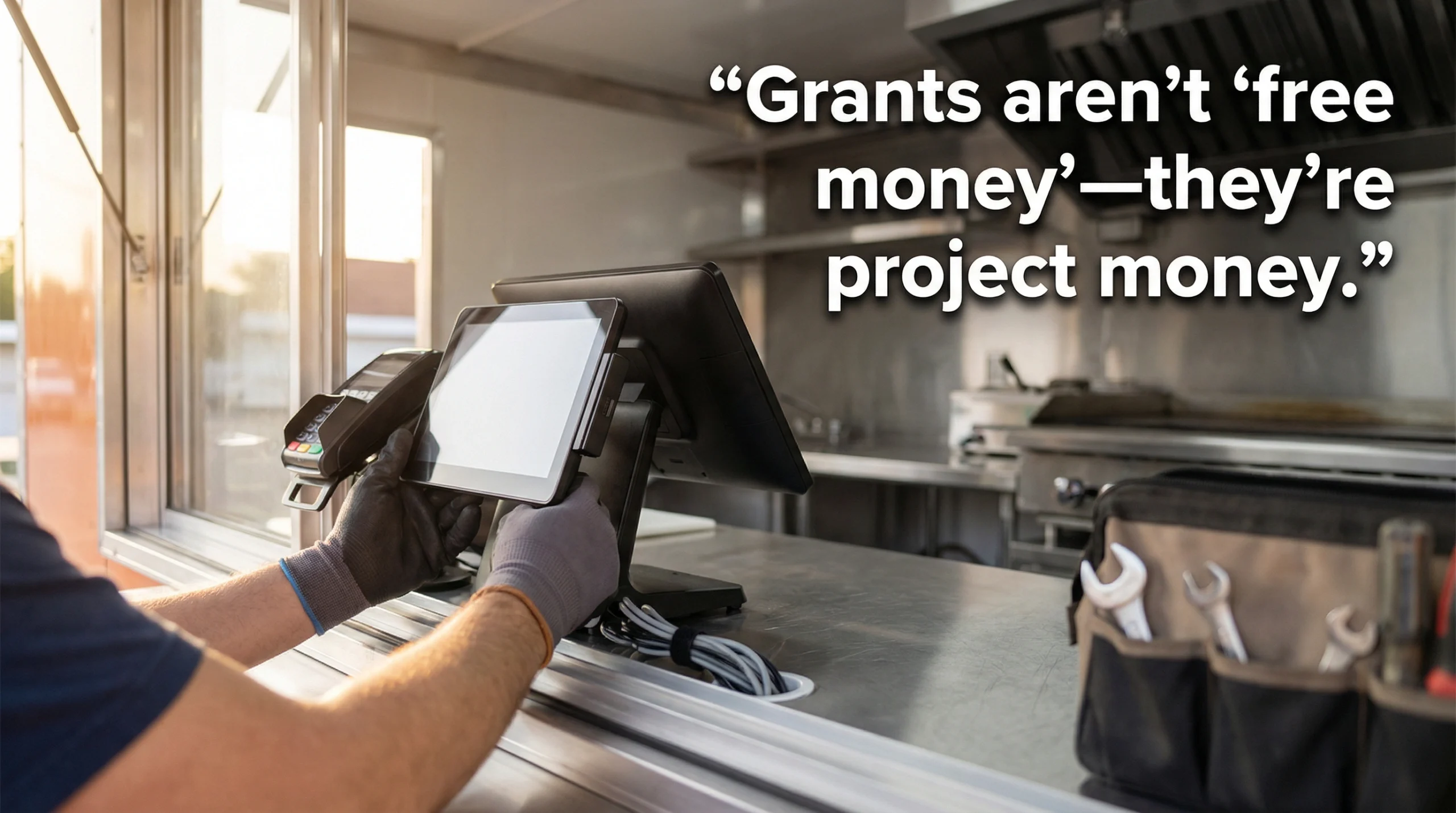
- “I need a POS upgrade.”
- “I need permits and compliance handled.”
- “I want to scale—second unit, better equipment, better internal infrastructure.”
Grants are built for those kinds of moves like capital improvements, tech, compliance, clean-air equipment, food access projects. NOT “help me cover payroll this month.”
And yes, some of the numbers are real money:
- USDA Local Food Promotion Program (LFPP): $25,000–$500,000 (often tied to regional food systems / mobile market concepts) with a 25% match and serious reporting expectations.
- Los Angeles County Small Business Mobility Fund: $500–$5,000 for permits, compliance, and tech upgrades. A perfect “quick win” grant money example you may find in your area as well.
- Portland-style programs can reach $25,000–$50,000 for repair/restore and clean equipment upgrades.
That’s the difference between “making do” (hobbyist attitude) and “building something durable” (professional attitude).
The types of grants food truck owners should be researching
1) Big federal programs (high reward, high paperwork)
If your truck doubles as a mobile market, sources local produce, supports regional producers, or has a food-access angle, that’s where big programs like LFPP can fit. Expect match requirements, timelines, and real reporting.
2) City / county microgrants (fast, practical, less intimidating)
These are the grants that help with the stuff that slows you down:
- permits
- compliance fees
- tech upgrades (POS, online ordering)
- small equipment fixes
LA’s program is a good example of “small money that solves real problems.”
3) Equity-focused grants (mission + documentation)
There are awards aimed at women-owned and Black-owned businesses in the $10,000–$50,000 range (like Amber Grant and NAACP Powershift). These can be great opportunities, but they want documentation and measurable impact not just feel-good vibes.
Grant “ready” is a thing and it’s why most people never win a grant
Here’s what knocks out a ton of applications:
- vague budget or impossible numbers
- no sales projections
- no impact metrics (meals served, neighborhoods reached, % local sourcing)
- weak plan for match money
- missing documentation for eligible expenses
If you want a competitive edge, treat “grant readiness” like a prepping for a huge event.
Grant-Ready Checklist
- Basic P&L and clean bookkeeping
- A simple project budget with line items
- Quotes for major purchases
- A timeline with milestones
- Proof you can track results (POS reports, meal counts, service areas)
And don’t overlook free help: SBDCs offer one-on-one support to tighten financials, planning, and documentation.
How to write a grant proposal that actually win
Grant reviewers don’t fund “I want to grow.” They will fund measurable outcomes.
Instead of “We want to serve the community.” Think in terms of impact like, “We will serve 1,500 meals per month in X area, create 2 part-time jobs, and track service locations weekly.”
Then back it up with:
- a timeline (what happens in month 1–3, 4–6, etc.)
- a budget where every dollar connects to an outcome
- partnerships/letters of support (neighborhood orgs, farmers, workforce groups)
Also: don’t wing the match requirement if the program has one. LFPP-style programs can require 25% match and not having it planned is a quick rejection (or worse, repayment risk).
The part nobody tells you: reporting will make or break you
If you land a grant, treat it like a detailed and budgeted project, not a pile of free cash you found on the street.
A strong approach:
- separate tracking (separate account or clear cost center)
- tag expenses to the grant line items
- reconcile monthly with POS/payroll data
And understand the burden:
- some programs expect you to retain receipts for years (the doc notes 7 years is often expected)
- miss a report and you can face clawbacks or limits on future funding disbursements
Translation: If you can’t prove it, it didn’t happen. If it doesn’t happen they will want the money back.
Common grant mistakes
- Thinking the grant solves everything
Owners get blindsided by extra costs: permits, downtime, insurance changes, storage, and admin time. - Not budgeting for compliance + reporting
You should plan a small contingency and real admin time, so the grant doesn’t stall your operation. - Applying for the wrong fit
If the funder is paying for food access and your project is “new wrap + new menu boards,” you’re wasting your shot. Align to their mission. - Starting up with no “skin in the game”
Thinking a grant will fund your dream without you working towards and investing in your own dream is wasting everyone’s time. Sweat equity must be provable and carries as much weight as personal capital investment BUT without both the application is a wish without a genie to grant it.
Where to find grants (the simple hunting plan)
If you’re trying to track this stuff down, don’t overcomplicate it:
- Start local: city/county economic development, vendor programs, SBDC lists
- Stack small wins: microgrants can fund permits/tech and make you more competitive later
- Then go bigger: once you’ve proven you can run a funded project, larger programs get easier to justify
Your next move (do this this week)
Here’s your action step:
- Pick one project you’d use money for (generator upgrade, POS + data tracking, commissary buildout, mobile market route, etc.).
- Write three measurable outcomes (meals, jobs, neighborhoods, % local sourcing—something trackable).
- Build a one-page budget + timeline.
- Call your local SBDC and ask for “grant readiness help.”
If you do just that, you’ll be ahead of most applicants.
Grants can pay for permits, equipment, pod hookups, and upgrades that help you grow without selling your soul. But they reward operators who run their paperwork like they run their line: clean, consistent, and on purpose.
Quick note: This is educational info, not legal/tax advice. Always verify program rules and talk to a qualified pro when needed.